Profhilo vs Polynucleotides: Which Skin Booster Is Right for You?
Written by Rahena, Level 7 Aesthetic Practitioner | Mesglo London
Published
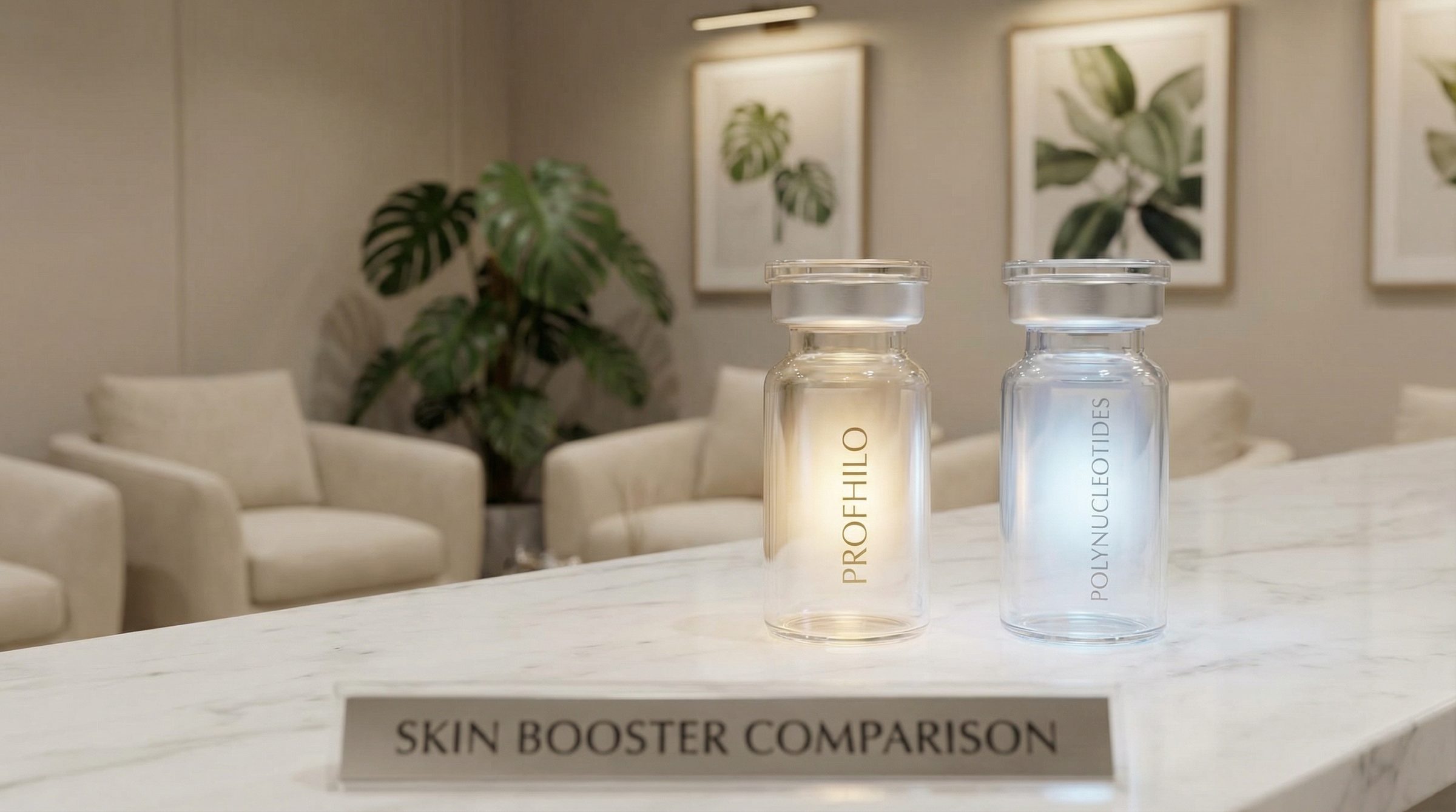
Two of the most popular injectable skin treatments in London today are Profhilo and polynucleotides. Both are classed as skin boosters, both are administered by injection, and both promise to improve skin quality: yet they work in fundamentally different ways and suit different skin concerns. At Mesglo London, we are frequently asked which treatment is better, and the honest answer is that it depends entirely on your skin goals, age, and the specific concerns you want to address. This guide provides a definitive, evidence-based comparison to help you make an informed decision.
What Is Profhilo?
Profhilo is an injectable skin remodelling treatment made from ultra-pure, high-concentration hyaluronic acid (HA). Unlike traditional dermal fillers, Profhilo is not designed to add volume or sculpt facial contours. Instead, it spreads beneath the skin surface to stimulate the production of four different types of collagen and elastin, while simultaneously providing intense hydration.
The treatment is administered at five specific injection points on each side of the face: known as the BAP (Bio Aesthetic Points) technique: which allows the product to diffuse evenly across the entire face. Results are typically visible within two to four weeks of the first session, with most patients completing an initial course of two treatments spaced four weeks apart.
Profhilo is particularly effective for patients who notice their skin has become lax, crepey, or dull: the classic signs of bio-remodelling loss that occur naturally from the mid-30s onwards.
- Ultra-pure hyaluronic acid: no chemical cross-linking agents
- Stimulates collagen types I, III, IV and elastin
- Administered via 10 injection points (5 per side)
- Two-session protocol, four weeks apart
- Results last approximately six to nine months
What Are Polynucleotides?
Polynucleotides (also known as PDRN, polydeoxyribonucleotide) are fragments of purified DNA derived from salmon or trout sperm cells. The DNA sequences are carefully processed to remove any allergenic proteins, leaving only the nucleotide chains that interact with receptors in human tissue to trigger cellular regeneration.
When injected into the skin, polynucleotides activate A2A adenosine receptors, which initiate a cascade of regenerative processes: fibroblast proliferation, increased collagen synthesis, improved tissue oxygenation, and a measurable reduction in chronic inflammation. The result is genuine structural improvement in the skin, not just surface hydration.
Polynucleotides are available under several brand names in the UK, including Plinest, Newest, and Nucleofill. At Mesglo London, we use clinically validated formulations and tailor the treatment protocol to each patient's skin assessment.
- Derived from purified salmon or trout DNA
- Activates cellular regeneration at a structural level
- Reduces inflammation and oxidative stress
- Improves skin density, elasticity, and luminosity
- Results develop progressively over four to eight weeks
- Protocol typically involves three sessions, two to four weeks apart
Profhilo vs Polynucleotides: A Direct Comparison
Understanding the key differences between these two treatments is essential for choosing the right option. The table below summarises the most clinically relevant distinctions.
| Factor | Profhilo | Polynucleotides |
|---|---|---|
| Active ingredient | Ultra-pure hyaluronic acid | PDRN / DNA fragments |
| Primary mechanism | Bio-remodelling + hydration | Cellular regeneration + repair |
| Sessions required | 2 sessions (4 weeks apart) | 3 sessions (2–4 weeks apart) |
| Results timeline | 2–4 weeks post first session | 4–8 weeks progressive improvement |
| Results duration | 6–9 months | 9–12 months |
| Best for | Dehydrated, lax, dull skin | Mature, sun-damaged, crepey skin |
| Downtime | Minimal (24–48 hours) | Minimal (24–48 hours) |
| Can be combined | Yes, with polynucleotides | Yes, with Profhilo, exosomes |
Who Should Choose Profhilo?
Profhilo is the ideal starting point for patients in their late 20s to early 40s who are noticing the first signs of skin laxity, dehydration, or loss of glow. If your primary concern is that your skin looks tired, dull, or has lost its bounce, rather than deep wrinkles or significant volume loss: Profhilo will typically deliver the most immediate and visible improvement.
It is also an excellent choice for patients who want a quick result before a significant event, as the hydrating and brightening effects can be apparent within two weeks of the first session. Profhilo is safe for use on the face, neck, décolletage, and hands.
Who Should Choose Polynucleotides?
Polynucleotides are particularly well-suited to patients over 40 who are experiencing more pronounced signs of skin ageing, including deeper lines, significant loss of elasticity, or sun-damaged skin with uneven texture and pigmentation. Because polynucleotides work at the level of cellular biology, they deliver more profound structural improvement over a longer period.
They are also the treatment of choice for the delicate under-eye area, where the Lumi Eyes formulation of polynucleotides has become one of the most effective non-surgical solutions for dark circles, hollowing, and fine lines. For patients with hair loss, polynucleotide scalp injections offer a regenerative alternative to PRP with a strong evidence base.
Can You Combine Profhilo and Polynucleotides?
Yes, and at Mesglo London, we frequently recommend a combination approach for patients who want comprehensive skin rejuvenation. Profhilo provides the immediate hydration and bio-remodelling foundation, while polynucleotides deliver the deeper, longer-lasting structural regeneration. The two treatments complement each other without competing, and combining them can significantly extend the duration and quality of results.
A typical combination protocol begins with polynucleotides to initiate cellular regeneration, followed by Profhilo four weeks later to boost hydration and surface quality. Maintenance sessions are then tailored to the individual's response and skin goals.
What to Expect at Your Consultation at Mesglo London
At Mesglo London, every treatment begins with a thorough skin assessment and consultation. We assess your skin type, concerns, medical history, and aesthetic goals before recommending a personalised treatment plan. There is no one-size-fits-all answer to the Profhilo vs polynucleotides question: the right choice depends on your unique skin biology and what you want to achieve.
Our Marylebone clinic offers both treatments as standalone sessions and as part of bespoke combination programmes. We will always explain the evidence behind our recommendations and ensure you feel fully informed before proceeding.
Conclusion
Both Profhilo and polynucleotides represent the gold standard of injectable skin quality treatments available in London today. The choice between them is not a question of which is better in absolute terms, but which is better for your skin at this moment in time. At Mesglo London, our approach is always to recommend the treatment that will deliver the most meaningful improvement for your specific concerns, and in many cases, that means combining both. Book a consultation at our Marylebone clinic to receive a personalised assessment and treatment plan.
Frequently Asked Questions
- Is Profhilo or polynucleotides better for anti-ageing?
- Both are effective anti-ageing treatments, but they work differently. Profhilo is better for rapid hydration and skin laxity in patients under 45. Polynucleotides are superior for deeper structural regeneration and are particularly effective for mature skin with significant sun damage or loss of elasticity. Many patients benefit from combining both.
- How long do Profhilo results last?
- Profhilo results typically last six to nine months after completing the two-session initial protocol. Maintenance sessions every six months are recommended to sustain results.
- How long do polynucleotide results last?
- Polynucleotide results generally last nine to twelve months, with progressive improvement continuing for several weeks after the final session. A maintenance session once or twice a year is typically sufficient.
- Are Profhilo and polynucleotides painful?
- Both treatments involve injections and some patients experience mild discomfort. A topical numbing cream is applied before treatment to minimise any sensation. Most patients describe the experience as very tolerable.
- Can I have Profhilo and polynucleotides on the same day?
- In most cases, we recommend spacing the two treatments by at least two to four weeks to allow the skin to respond to each treatment individually and to accurately assess results. Your clinician will advise on the optimal timing during your consultation.
Related Treatments at Mesglo London
Related Articles You May Find Useful
- How Lumi Eyes Treatment Transforms Dark Circles and Under-Eye Concerns (Skin Treatments)
- The Benefits of Mesotherapy for Skin Rejuvenation (Skin Treatments)
- Cosmelan Peel vs Chemical Peels: Which Pigmentation Treatment Works Best? (Skin Treatments)
- Skinfill Bacio vs Lip Filler: Which Lip Treatment Is Right for You? (Lip Treatments)
Book a consultation at Mesglo London to discuss this treatment.
View our before and after results to see real patient outcomes.
Browse all articles on the Mesglo London blog for more expert insights.