
Cheek Filler in Marylebone, London
Restore midface volume and define the cheekbone, from £350
Cheek filler in Marylebone: what it is and what it does
Cheek filler is a hyaluronic acid gel placed in the midface to replace volume that has been lost, or to add definition that was never there. At Mesglo in Marylebone it starts from £350, takes 30 to 45 minutes, and you leave with a visible change the same day. The final result is judged at two weeks, once swelling has settled.
The midface is usually the first place a face loses volume, and it loses it from the deep fat pads that sit over the cheekbone. When that support goes, the tissue below it descends: the cheek flattens, the nasolabial fold deepens and the area under the eye looks hollower. Restoring support high on the cheekbone lifts the tissue below it, which is why midface filler often improves a nasolabial fold without the fold itself being injected.
The same treatment is used for a different reason by people who have not lost anything. Adding projection over the cheekbone sharpens the line between the cheek and the jaw and reads clearly in photographs, which is the result most younger patients are asking for when they say cheek filler.
Every treatment at Mesglo is assessed and performed by Rahena, who holds the Level 7 Diploma in Aesthetic Practice, the highest Ofqual regulated qualification in medical aesthetics, and is ACE Group World certified in managing complications.
If you are still deciding, our guide to cheek filler, explained answers the questions people ask before they book: what it treats, who it suits, what the appointment involves and how the first two weeks feel.
Key Benefits
- Restores youthful mid-face volume
- Lifts and contours the cheekbones
- Reduces the appearance of nasolabial folds
- Creates a natural, refreshed appearance
- Immediate results with minimal downtime
- Long-lasting effects (12-18 months)
- Can be combined with other treatments
- Fully reversible if needed
What cheek filler costs at Mesglo, and what the price covers
Cheek filler at our Marylebone clinic starts from £350. The final figure depends on how much product the plan needs, and it is confirmed in writing at your consultation before anything is agreed, so you never meet a price on the day.
The fee covers the assessment, the plan, the product, the treatment itself, aftercare advice and the review appointment where the settled result is checked. Current prices for every treatment are on our booking page, and you are welcome to ask on WhatsApp before you book.
A word on cost generally. Cheek filler priced well below the market usually means a smaller volume than the plan requires, a cheaper product, or a practitioner without the qualification and the medical backup to manage a complication. Correcting a poor midface result costs more than having it done properly once.
How hyaluronic acid cheek filler works
Hyaluronic acid is a sugar molecule your own skin already makes. It holds water, and that is the whole mechanism: a gel of cross linked hyaluronic acid placed under the skin draws water to itself and occupies space, so the tissue above it sits higher than it did. Nothing is cut and nothing is implanted permanently. The body breaks the gel down over months with its own enzymes until the area returns to how it started.
How a filler behaves depends on how tightly it is cross linked. The midface needs a firm, highly cross linked gel that resists being squashed, because its job is to hold a shape on bone and carry the weight of the tissue above it. A soft gel placed there spreads, moves and achieves nothing visible. A firm gel placed too superficially, or in soft tissue that moves, is how a face ends up looking stiff or puffy. The choice of gel, the depth and the volume are three separate decisions, and all three are made at the assessment rather than on the day you book.
Because the gel is hyaluronic acid rather than a permanent implant, it can be dissolved. An enzyme called hyaluronidase breaks it down within a day or two. That reversibility is the single most important safety feature of this class of filler, and it is why we do not offer permanent or semi permanent alternatives.
Where cheek filler is placed, and what each placement changes
Cheek filler is not one treatment. Three different placements do three different things, and the assessment decides which of them your face is actually asking for.
High on the cheekbone, for definition. A firm gel placed deep over the zygomatic bone adds projection and sharpens the line between the cheek and the temple. This is the placement behind the result people mean by cheekbone filler, and it is structural work, so a small volume placed accurately changes more than a large volume placed loosely.
In the midface, for lift. Support placed in the deep medial cheek replaces the fat pad volume that has gone. It lifts the tissue below rather than filling the fold, which is why a nasolabial fold often improves when the midface is treated and nothing else is.
In the anterior cheek, for a flattened front. The front of the cheek hollows with age and with weight loss, and the result reads as a tired face rather than a lined one. A softer gel restores the curve from the front rather than from the side.
Some concerns look like midface volume loss and are not. Loose skin with no volume deficit will not tighten with filler, and adding gel to it makes the face heavier rather than firmer. Fine surface lines, dull skin and loss of general skin quality are answered by treatments that work on the skin itself, such as Profhilo, polynucleotides or micro-needling. Heaviness along the jaw belongs with jaw and jowl treatment rather than with the cheek. Hollowness under the eye may be a tear trough question instead. An assessment that ends with a recommendation other than cheek filler is a normal outcome of the consultation, not a failed one.
Treatment Process
- Consultation Assessment of facial structure and discussion of goals
- Treatment Planning Customised plan for optimal volume and placement
- Preparation Cleansing and optional numbing of treatment area
- Treatment Strategic injection of premium dermal filler
- Moulding Gentle shaping for natural contours
- Review Follow-up to assess results
How long cheek filler lasts
Cheek and midface filler typically lasts 12 to 18 months, which is longer than lips because the area moves far less. Deep structural work on bone lasts at the longer end of that range.
Longevity is decided by three things: the product, the area and you. A fast metabolism, regular high intensity exercise, heavy sun exposure and smoking all shorten the life of a filler result. The pattern most people settle into is a review at around twelve months, where a smaller top up maintains what is already there, which costs less and uses less product than starting again from nothing.
The first two weeks after cheek filler
You will see a lift as you leave, because the gel occupies space immediately. What you see on day one is not the result. Swelling peaks in the first 24 to 48 hours, settles over the following week and has usually resolved by two weeks, which is when the outcome is assessed and when photographs are taken.
Bruising is possible anywhere a needle enters skin, though it is less likely on cheeks than in lips or tear troughs. It typically fades within a week and covers easily with make up. Tenderness, small firm areas that soften, and a slightly uneven feel in the first days are all normal and are not a sign that anything has gone wrong.
For the first 24 hours, keep the area clean, avoid make up over the injection points, and avoid strenuous exercise, saunas, steam rooms and alcohol. Avoid facials, massage and any other treatment over the area for two weeks, and sleeping on your back for the first couple of nights helps. If something concerns you at any point, contact the clinic rather than waiting for the review: early questions are easy to answer.
Cheek filler, Profhilo or a skin booster: which does what
These three get compared as if they were competing versions of the same treatment. They are not, and the difference decides which one will do anything for you.
Cheek filler is a cross linked gel that holds a shape. It restores volume and creates structure, and it is the only one of the three that lifts a midface or projects a cheekbone.
Profhilo is not cross linked in the same way and is not placed to hold a shape. It hydrates and improves skin quality across an area, which helps a crepey or dull cheek but will not restore lost volume.
Skin boosters and polynucleotides work on the skin itself rather than on the volume beneath it, improving texture, hydration and firmness over a course.
They are frequently combined, in which case the volume is addressed first and the skin quality afterwards. If you are weighing them up, our Profhilo and dermal filler comparison and the treatment comparison page set them side by side.
Risks, side effects and how they are reduced
Every injectable treatment carries risk, and a clinic that does not discuss it is not giving you what you need to consent properly.
Common and self limiting: swelling, bruising, redness at injection points, tenderness and short lived asymmetry while the swelling settles.
Uncommon: a firm area or nodule that needs massage or, occasionally, dissolving; a result that is not what you wanted, which with hyaluronic acid can be adjusted or reversed; delayed inflammatory swelling, which can appear weeks or months later, often after an infection or a vaccination, and is managed medically.
Rare and serious: vascular occlusion, where filler enters or compresses a blood vessel and interrupts the blood supply to the skin, or in the worst case to the eye. The midface carries important vessels, which is the reason this treatment must be placed by someone who knows the vascular anatomy of the face, who aspirates and injects slowly, who uses a cannula where a cannula is safer, and who keeps hyaluronidase on site and knows the protocol for using it urgently. Ask any clinic you are considering whether they hold hyaluronidase and what their escalation plan is. At Mesglo the answer is yes, and the plan is explained at your consultation.
This page is general information. It is not personal medical advice, and nothing here replaces an in person assessment.
Who should not have cheek filler
We will decline treatment, or defer it, if you are pregnant or breastfeeding; if you have an active skin infection, cold sore or inflammatory flare in or near the area; if you have a known allergy to hyaluronic acid or to lidocaine; if you have an autoimmune or connective tissue condition that is not stable; or if you have had a vaccination or a dental procedure in the last fortnight, in which case we wait.
We will also decline when filler is not the answer. A midface with loose skin and no volume deficit, or a request for a change that the face cannot carry, is better served by saying so at the assessment than by injecting.
Cheek filler in Marylebone, central London
Treatment is carried out by Rahena, an Ofqual regulated Level 7 practitioner, at our clinic at 4 Baker Street, London W1H 6AZ. We are five minutes from Baker Street station and seven from Marble Arch, which puts us within easy reach of Marylebone, Harley Street, Mayfair, Fitzrovia and the West End. The clinic is open Monday to Saturday, 9:00am to 6:00pm.
Every treatment begins with a face to face assessment rather than a price list. If you would like to talk it through first, book a consultation online, call the clinic, or message us on WhatsApp. Cheek filler is often planned alongside filler in other areas or lip enhancement, and the whole plan is agreed before anything is done.
Questions people ask
How much is cheek filler in London?
Cheek filler at Mesglo in Marylebone starts from £350. The final price depends on how much product your plan needs and is confirmed in writing at your consultation, before anything is agreed.
How long do cheek fillers last?
Cheek and midface filler typically lasts 12 to 18 months, because the area moves far less than the lips. Deep structural work placed on bone lasts at the longer end of that range, and most people have a review at around twelve months where a smaller top up maintains the result.
What is the difference between cheekbone filler and midface filler?
They are different placements with different aims. A firm gel placed high on the cheekbone adds projection and definition. Support placed deeper in the midface replaces lost fat pad volume and lifts the tissue below it, which is why it often improves a nasolabial fold without the fold being injected.
Does cheek filler lift the face?
It lifts the midface tissue by restoring the support that holds it up, which softens the nasolabial fold and the flattening over the cheek. It does not tighten loose skin. If there is laxity with no volume deficit, filler makes the face heavier rather than firmer, and the assessment will say so.
Will cheek fillers look natural?
They look natural when the volume matches the face and the gel is placed at the right depth. An overfilled look comes from too much product, product in the wrong plane or a firm gel used where a soft one belonged. Small volumes placed accurately change more than large volumes placed quickly.
Is cheek enhancement painful?
Most people describe it as pressure rather than pain. Topical numbing is applied first and the fillers used contain lidocaine. Any discomfort is brief and settles as you leave.
What is the recovery time after cheek filler?
There is no formal downtime and most people return to work the same day. Swelling peaks in the first 24 to 48 hours and has usually gone by two weeks. Avoid strenuous exercise, saunas, steam rooms and alcohol for 24 hours, and facials or massage over the area for two weeks.
When will I see the final result?
You see a change immediately, because the gel occupies space as soon as it is placed. The settled result is at two weeks, which is when it is assessed and photographed.
Can cheek filler be dissolved?
Yes. Only hyaluronic acid fillers are used at Mesglo, and hyaluronic acid can be broken down with an enzyme called hyaluronidase, usually within a day or two. That reversibility is the main safety feature of this class of filler.
How long does cheek filler treatment take?
The appointment is 30 to 45 minutes, including the assessment, the treatment and the aftercare advice.
Will cheek filler help my nasolabial folds?
Often, yes, without the fold being injected. The fold usually deepens because the midface above it has lost support, so restoring that support lifts the tissue and softens the fold. Where the fold still needs direct treatment, that is done after the midface rather than instead of it.
Who performs the treatment?
Rahena, the founder, assesses and performs every treatment at Mesglo herself. She holds the Level 7 Diploma in Aesthetic Practice, the highest Ofqual regulated qualification in medical aesthetics, and is ACE Group World certified in managing complications.
Is cheek filler safe?
The risk is reduced by who injects, what is injected and how much. Only hyaluronic acid fillers are used, so the result can be dissolved; the practitioner is Level 7 qualified and ACE certified in complications; hyaluronidase is held on site; and the serious risks, including vascular occlusion, are explained at consultation before you consent.
Who should not have cheek filler?
Treatment is not suitable if you are pregnant or breastfeeding, if you have an active infection, cold sore or inflammatory flare near the area, if you are allergic to hyaluronic acid or lidocaine, or if you have an unstable autoimmune or connective tissue condition. We also wait a fortnight after a vaccination or a dental procedure.
Can I have cheek filler with other treatments?
Yes, and it is commonly planned alongside filler in other areas, lip enhancement or a skin treatment such as Profhilo or polynucleotides. Where both are wanted, the volume is addressed first and the skin quality afterwards. The whole plan is agreed at the consultation.
Real results from this treatment
Photographs of real Mesglo clients, shown with their permission. Results vary from person to person.
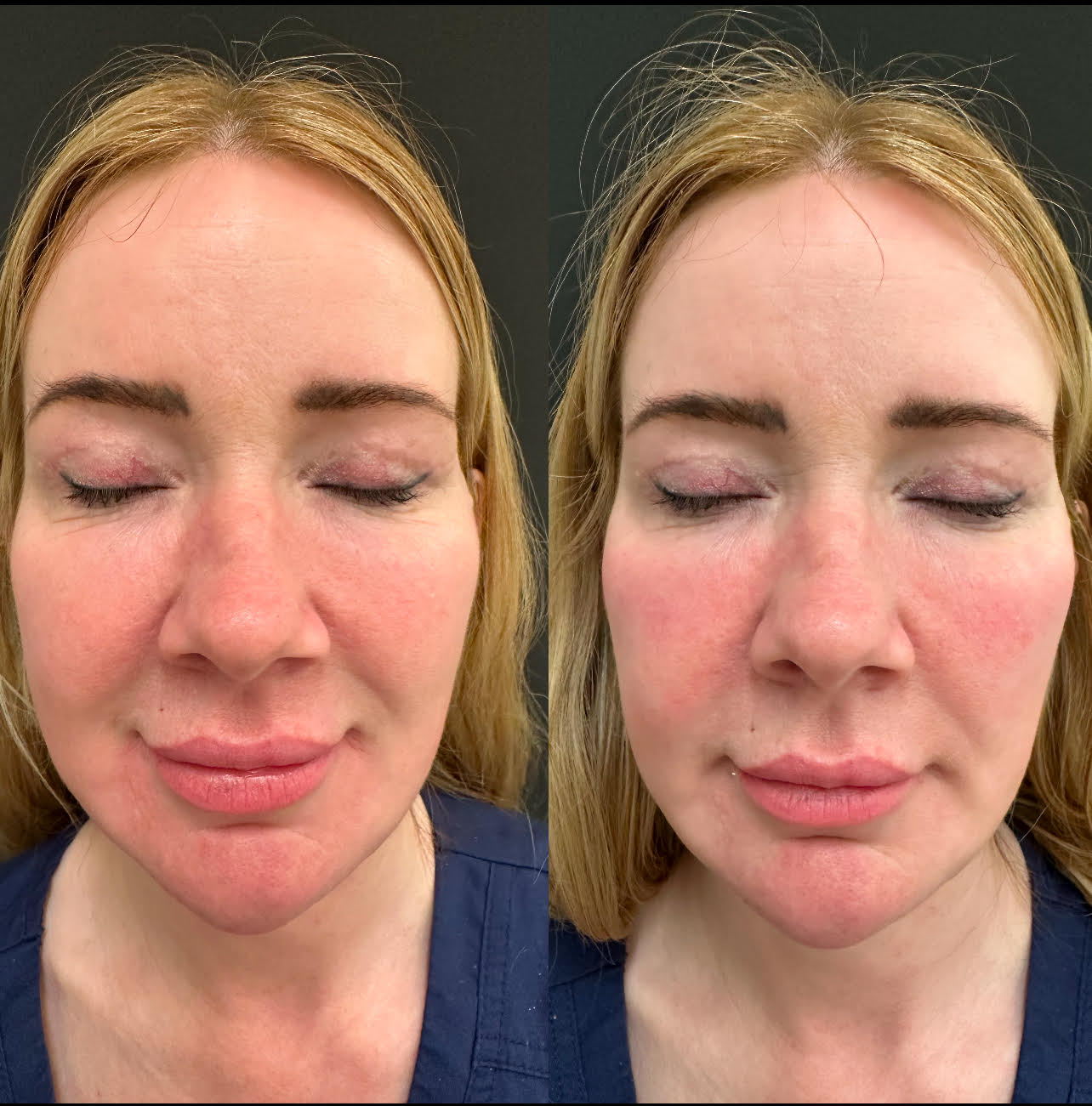
“Excellent service! Rahena was very friendly and attentive to my needs. Results to my treatment were amazing! Highly recommend!”Read all reviews
Related treatments


Start with a conversation
A consultation at 4 Baker Street comes first in every case. Rahena assesses your skin or hair, explains what would and would not help, and there is no obligation to go ahead.