
Exosome Hair Regeneration London
Revolutionary Hair Restoration in Marylebone
What is Exosome Hair?
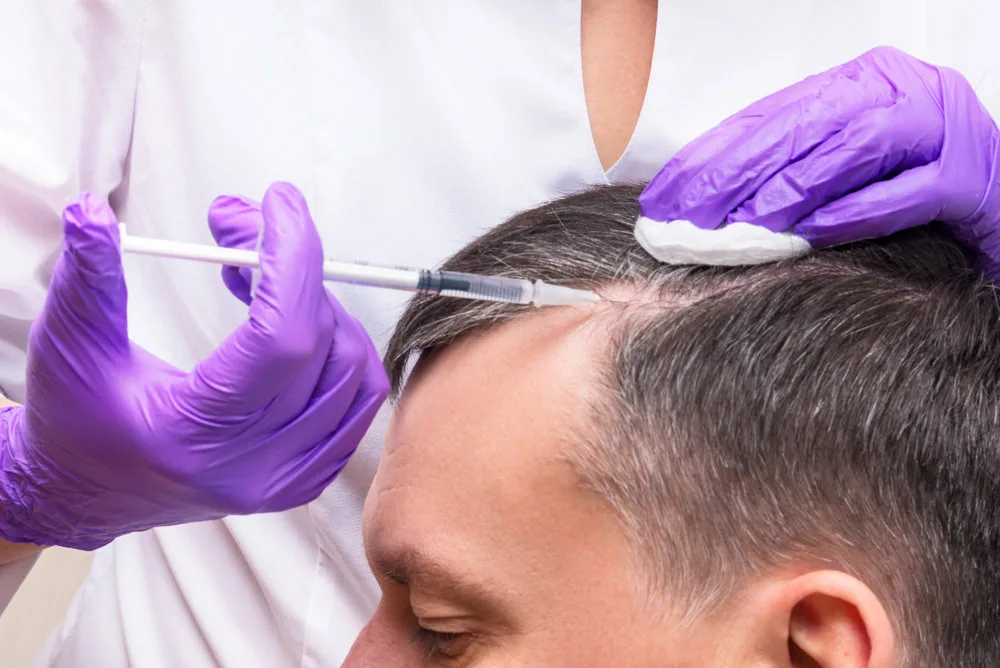
Our exosome hair treatment harnesses the regenerative power of cellular communication to revitalise dormant hair follicles. This groundbreaking therapy delivers growth factors directly to the scalp, stimulating natural hair regeneration without surgery or harsh chemicals.
Hair loss can be a deeply personal concern, affecting confidence and self-image. At Mesglo London, we offer exosome hair treatment as a cutting-edge solution that addresses hair loss at its source, the cellular level.
Exosome therapy for hair works by delivering a concentrated dose of growth factors, proteins, and signalling molecules directly to the hair follicles. These powerful messengers stimulate dormant follicles, improve blood circulation to the scalp, and create an optimal environment for healthy hair growth.
Key Benefits
- Stimulates dormant hair follicles
- Promotes natural hair growth
- Strengthens existing hair
- Improves scalp health and circulation
- Non-surgical, non-invasive solution
- Suitable for men and women
- No harsh chemicals or medications
- Progressive, natural-looking results
Treatment Process
- Analysis Detailed scalp analysis and consultation
- Preparation Scalp cleansing and preparation
- Application Targeted exosome solution application
- Delivery Micro-injection delivery technique
- Massage Scalp massage for optimal absorption
- Plan Comprehensive aftercare and treatment plan
What exosomes are, and why they are used on the scalp
Exosomes are tiny membrane bound packages that cells release to communicate with one another. They are not cells and they are not drugs. Each one carries a cargo of growth factors, proteins and signalling molecules, and when a cell takes one up it receives instructions: repair, divide, increase blood supply, reduce inflammation. That signalling is what the treatment borrows.
A hair follicle is not dead when hair thins. In most pattern hair loss the follicle is still present but has miniaturised: the growth phase has shortened, each successive hair comes through finer and shorter, and eventually the hair produced is too fine to cover the scalp. The aim of exosome therapy is to improve the environment that follicle is working in, by increasing blood supply to the scalp, reducing the inflammation around the follicle and signalling the follicle back towards a longer growth phase.
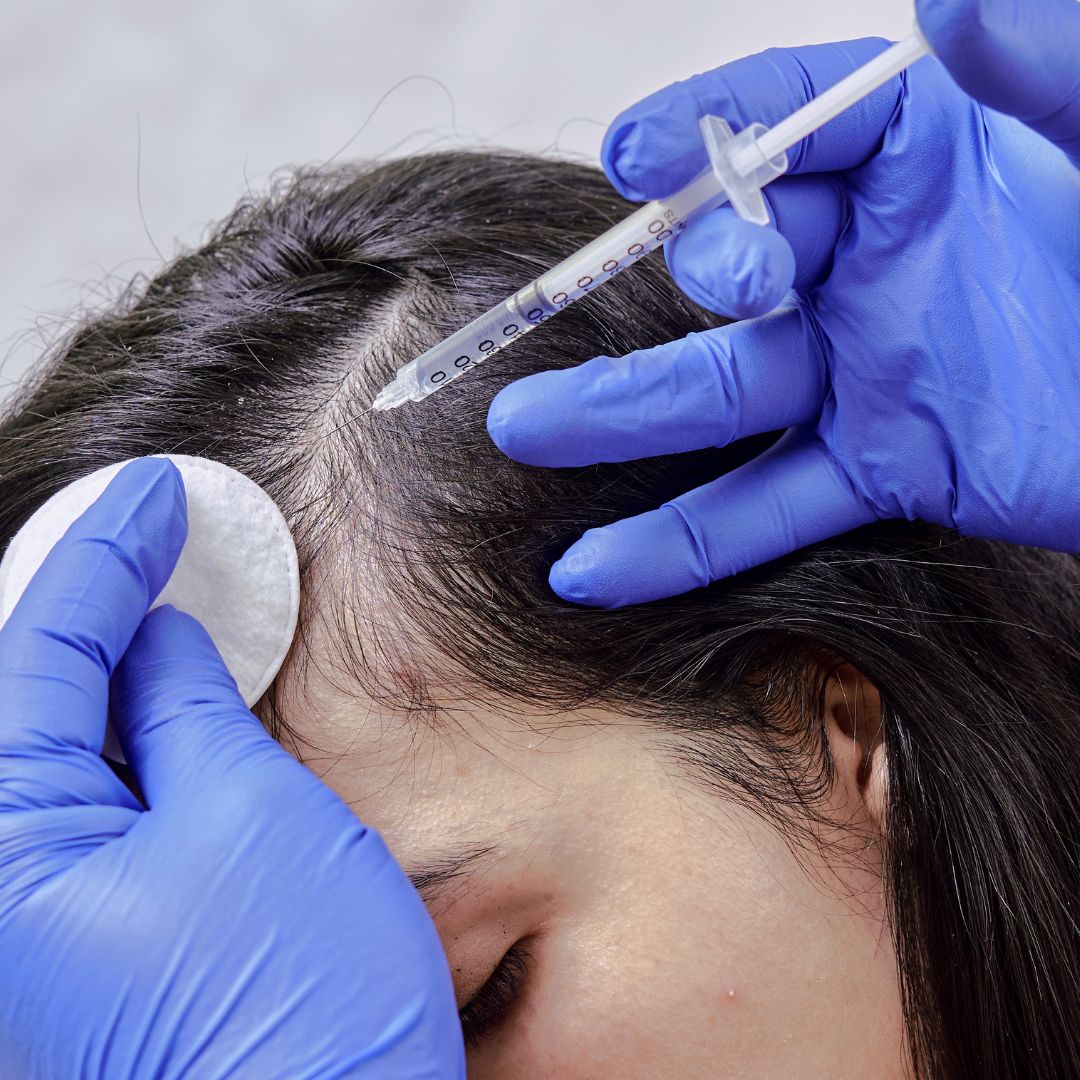
The treatment is delivered into the scalp with a series of very superficial micro-injections across the thinning area, so the solution sits where the follicles are rather than on the surface of the skin. A session takes forty five to sixty minutes including the scalp analysis and the preparation.
This is an aesthetic treatment rather than a prescribed medicine for hair loss, the published evidence for it is still early, and results vary from person to person. We will tell you plainly at your assessment what we think the treatment can and cannot do in your case.
Who it suits, and who it does not
Exosome therapy works best where there is still a follicle to work with. The earlier in the process you start, the more there is to save.
It tends to suit: early to moderate thinning in men and women; a widening parting or a loss of density at the crown; hair that has become finer and flatter rather than absent; shedding after illness, significant stress, childbirth or a crash diet; thinning alongside a scalp that is irritated or flaky; and anyone who wants to support a transplant or an existing medical treatment rather than replace it.
It does not suit: an area that is genuinely bald, where the follicles are scarred over and nothing remains to stimulate; scarring alopecia, which needs dermatological diagnosis and management first; and active untreated scalp disease or infection, which is treated before any injectable goes near it.
Hair loss also has causes that no injectable addresses. Thyroid disease, iron deficiency, low ferritin, certain medications and autoimmune conditions all cause hair to thin, and treating the scalp while leaving the cause in place wastes your money. If your history suggests one of these, we will say so and ask you to see your GP for blood tests before we proceed.
What a course looks like, and when results appear
Hair grows on its own timetable and no treatment changes that. A follicle pushed back into its growth phase still has to grow a hair at roughly a centimetre a month, which is why nothing visible happens quickly and why anyone promising a result in weeks is not describing hair biology.
- Weeks one to six: usually nothing visible. Some people notice that shedding slows and the scalp feels less irritated.
- Weeks six to twelve: hair quality often changes before density does. Existing hair feels thicker, holds better and looks less flat.
- Months three to six: new growth becomes visible, first as short fine regrowth along the parting or at the crown.
- Months six to twelve: that regrowth thickens and lengthens, and the overall density of the area improves.
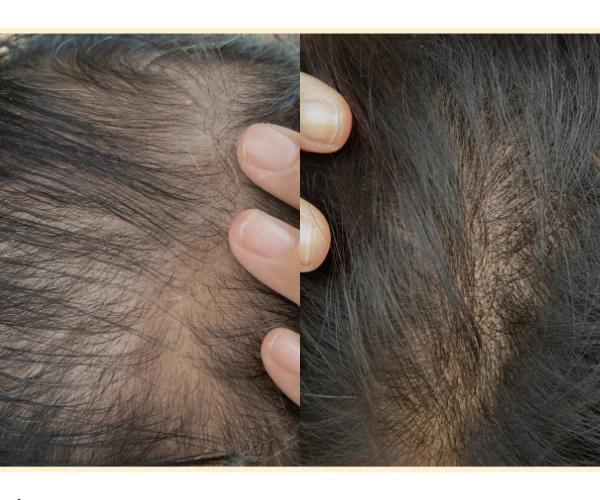
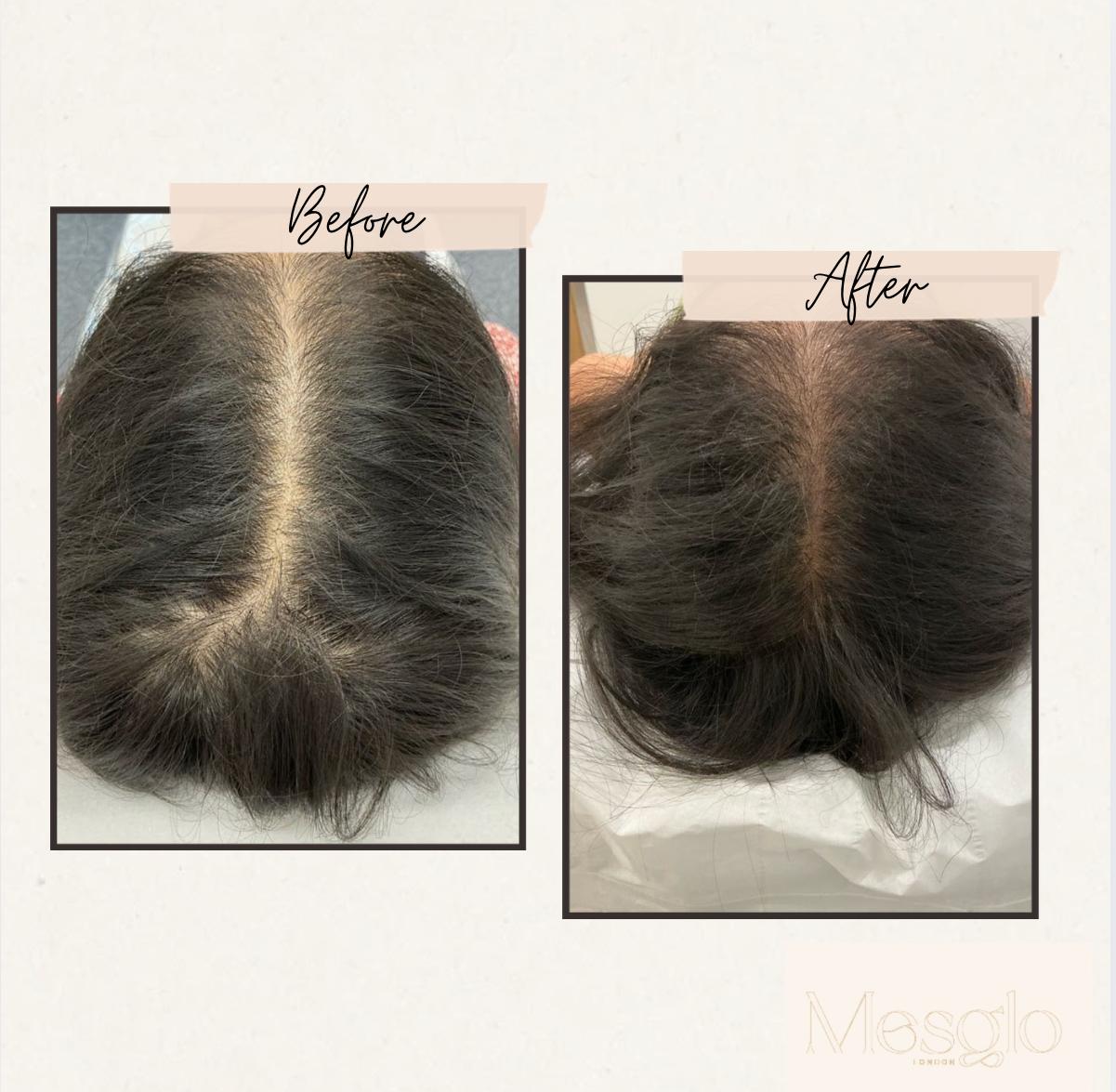
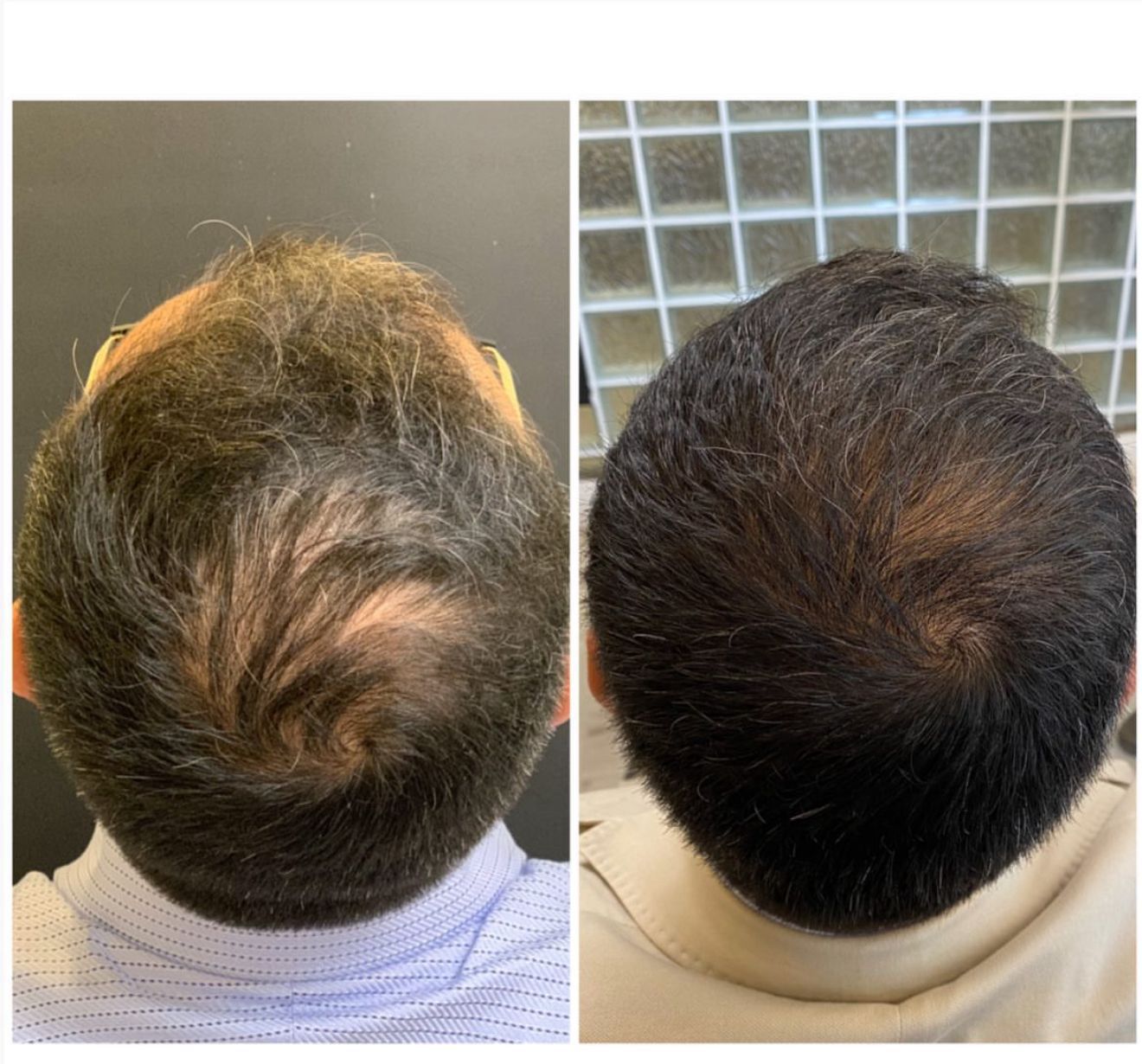
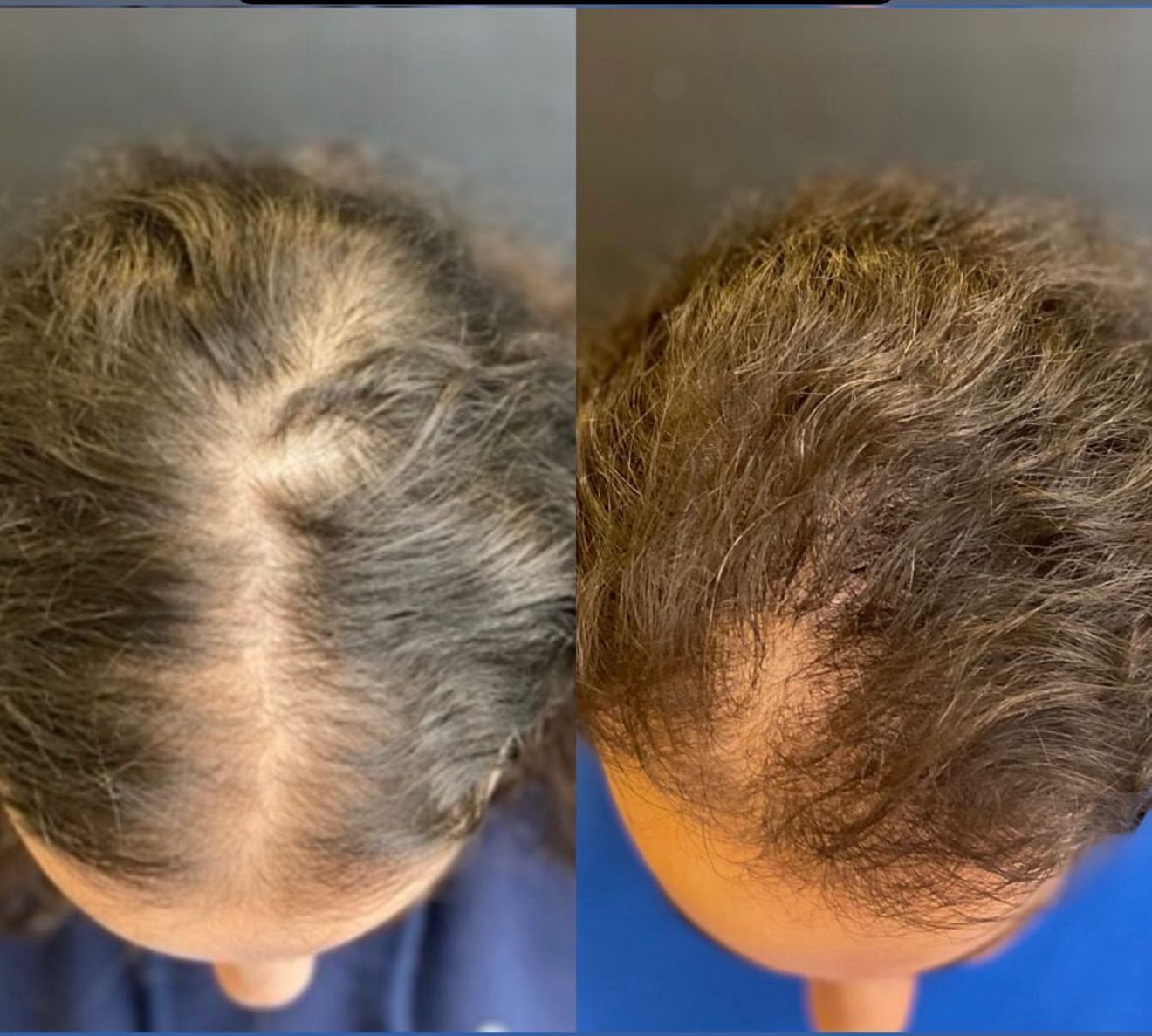
A course is normally three sessions spaced about four weeks apart, with maintenance after that judged on how your scalp has responded rather than on a fixed schedule. We photograph the same areas under the same conditions at the start and at each review, because hair change is gradual enough that memory is an unreliable way to judge it.
Exosomes, polynucleotides and PRP for hair loss
All three are injected into the scalp and all three aim to improve the environment the follicle works in. They differ in what is being injected.
Exosome therapy delivers a prepared, standardised concentration of signalling material, so the dose does not depend on your own blood on the day. It requires no blood draw and no processing time in the clinic.
Polynucleotides are purified DNA fragments that hold water, support the tissue around the follicle and calm inflammation. They are often the choice where the scalp itself is the problem, and they are frequently used alongside exosomes rather than instead of them.
PRP uses the growth factors in your own blood, drawn and spun on the day. It is the longest established of the three. Because the concentration depends on your own blood, it varies between people and between sessions.
Direct head to head trials between these treatments are limited, so claims that one is definitively better than another should be read with care. What we can do is assess your scalp, your history and what you want, and recommend one on that basis. Our treatment comparison page sets the options out side by side, and you can read more in our guides to polynucleotides versus PRP for hair loss and non surgical hair restoration.
Aftercare, downtime and side effects
There is no meaningful downtime. The scalp is usually a little pink and tender for a few hours and most people go straight back to work.
For the first twenty four hours, do not wash your hair, do not apply styling products, and avoid strenuous exercise, saunas, steam rooms and swimming. Keep the scalp out of direct sun. Avoid colouring or chemically treating your hair for about a week. After that, normal washing, styling and brushing are fine.
Expected effects are short lived: pinkness, tenderness, mild swelling and occasionally small pinpoint bruises or scabs at the injection points, which settle within a few days. Rarely, an injectable scalp treatment can cause an infection or a localised reaction, which is why the scalp is cleansed first and why you are given a point of contact for afterwards. If the area becomes increasingly painful, hot or swollen rather than steadily better, contact the clinic.
Treatment is not carried out during pregnancy or breastfeeding, over active scalp infection or inflammatory disease, or where you have a known allergy to a component of the solution. Your suitability is assessed in person.
What exosome hair treatment costs at Mesglo
Exosome hair treatment at our Marylebone clinic starts from £650 a session. Most people are advised a course of three sessions about four weeks apart, and the total is confirmed in writing at your consultation before anything is agreed.
The fee covers the scalp analysis, the solution, the treatment, the before and after photographs, aftercare advice and your review. Current prices for every treatment are on our booking page, and you are welcome to ask on WhatsApp first.
We would rather talk you out of a course that will not work than sell you one. If your assessment suggests the thinning has a medical cause, or that the area is too far advanced for a regenerative treatment to help, we will tell you that at the consultation.
Exosome hair treatment in Marylebone, central London
Treatment is carried out by Rahena, an Ofqual regulated Level 7 practitioner, at our clinic at 4 Baker Street, London W1H 6AZ, a short walk from Baker Street and Bond Street underground stations and convenient for Marylebone, Harley Street, Mayfair and the West End.
Every course starts with a scalp assessment rather than a price. Book a consultation online, call the clinic, or message us on WhatsApp if you would like to ask something first.
Questions people ask
Who is suitable for exosome hair treatment?
Exosome hair therapy is suitable for both men and women experiencing hair thinning, early-stage hair loss, or those wanting to improve hair density and quality. It's most effective when started early in the hair loss process.
When will I see results from exosome hair treatment?
Initial improvements in hair quality may be noticed within 4-6 weeks. Significant new growth typically becomes visible after 3-6 months of treatment, with continued improvement over time.
How does exosome compare to PRP for hair loss?
Exosome therapy delivers a more concentrated dose of growth factors compared to PRP, often producing faster and more dramatic results for hair regeneration. Many clients find exosomes more effective.
How much does exosome hair treatment cost in London?
At Mesglo in Marylebone, exosome hair treatment starts from £650 a session. Most people are advised a course of three sessions about four weeks apart, and the full cost is confirmed at your consultation before anything is agreed. The fee covers the scalp analysis, the solution, the treatment, your photographs and the review.
How many exosome hair sessions will I need?
A course is normally three sessions spaced about four weeks apart. What happens after that depends on how your scalp responds, which is judged at review against your starting photographs rather than set in advance. Some people maintain with an occasional single session; others do not need more for a long period.
Does exosome hair treatment hurt?
The injections are very superficial and most people find it easily tolerable. Topical numbing can be applied to the scalp first if you would prefer. The scalp usually feels tender for a few hours afterwards and there is no lasting discomfort.
Is there any downtime after exosome hair treatment?
No meaningful downtime. The scalp may be pink and tender for a few hours. Do not wash your hair or use styling products for twenty four hours, and avoid strenuous exercise, saunas, steam rooms and swimming for the same period. Leave colouring or chemical treatments for about a week.
Will exosome therapy work if I am already bald?
No. The treatment stimulates follicles that are still present but have miniaturised. Where an area is genuinely bald the follicles have scarred over and there is nothing left to stimulate, so a surgical option is the honest answer there. We assess the area and tell you plainly which of the two applies to you.
Can I have exosome hair treatment alongside minoxidil, finasteride or a transplant?
Yes. Exosome therapy is often used alongside medical treatment or after a transplant rather than instead of either, and it does not replace anything prescribed for you. Tell us what you are already using or have had done, and we will plan around it. Any prescribed medication remains a matter for the doctor who prescribed it.
Are my results permanent?
No treatment stops hair loss permanently. Pattern hair loss is a continuing process, so the density you gain is maintained rather than fixed, and most people return for occasional maintenance. What a course does achieve is to improve the condition of the follicles you still have, which is why starting earlier gives you more to work with.
Who should not have exosome hair treatment?
It is not carried out during pregnancy or breastfeeding, over an active scalp infection or inflammatory scalp condition, in scarring alopecia before a dermatologist has assessed it, or where you have a known allergy to a component of the solution. If your history suggests a medical cause such as thyroid disease or iron deficiency, we will ask you to see your GP for blood tests first.
Is exosome therapy for hair loss evidence based?
It is an aesthetic treatment rather than a licensed medicine for hair loss, and the published evidence is still early, with small studies rather than large trials. We say that openly. What we can tell you is what we see on the scalp in front of us, and we photograph every course so the change is judged on your own results rather than on a claim.
Real results from this treatment
Photographs of real Mesglo clients, shown with their permission. Results vary from person to person.
“The clinic has such a luxurious feel and the treatments are top-notch. Rahena really takes the time to understand what you want and delivers beyond expectations.”Read all reviews
Related treatments



Start with a conversation
A consultation at 4 Baker Street comes first in every case. Rahena assesses your skin or hair, explains what would and would not help, and there is no obligation to go ahead.