
Polynucleotides vs Botox in London: Two Different Approaches to Skin Rejuvenation
Written by Rahena, Level 7 Diploma, ACE certified · 9 March 2026 · 4 min read
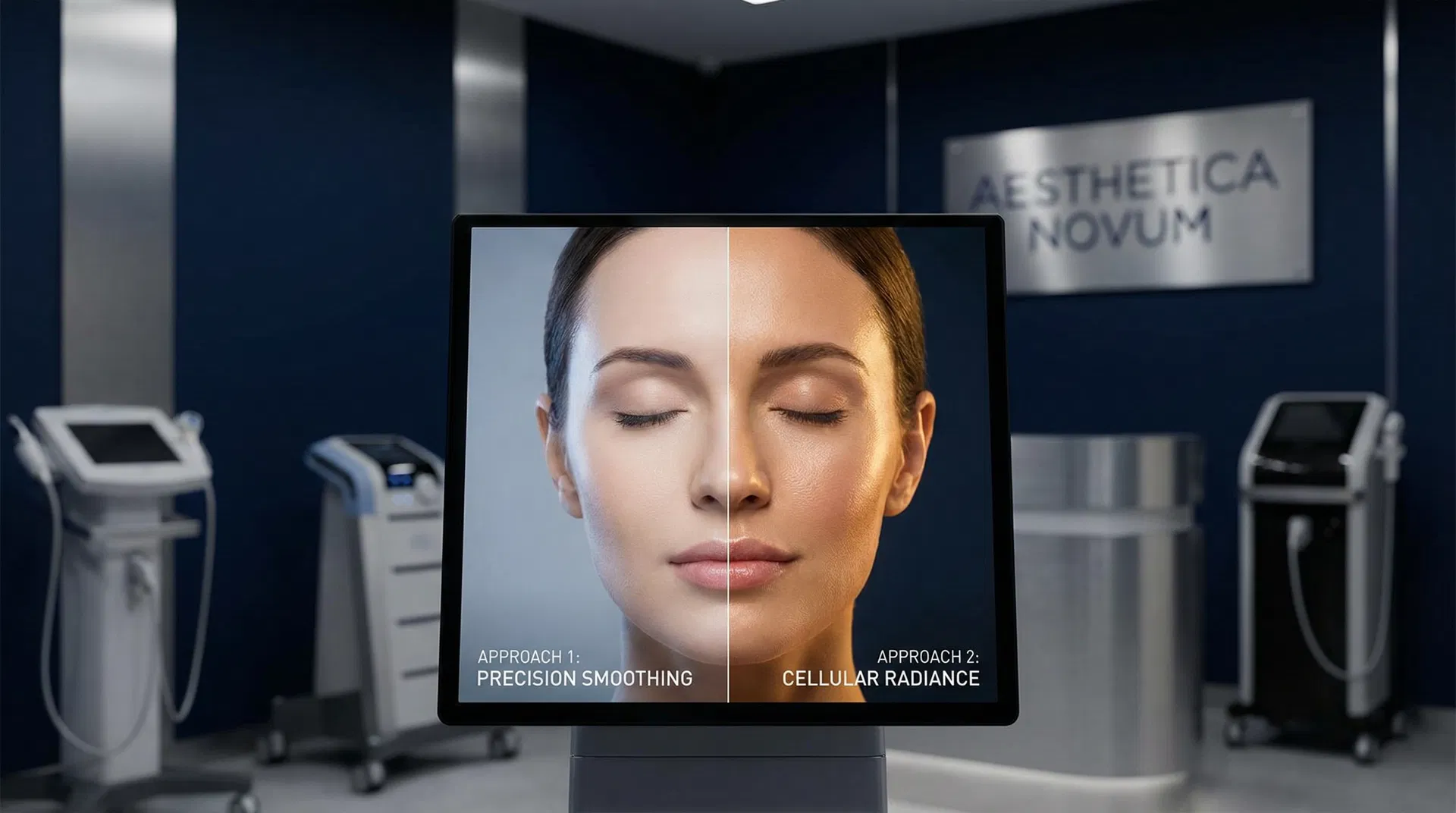
How Botulinum Toxin Works
Polynucleotides and botulinum toxin (botox) are two of the most popular treatments at Mesglo London, and patients frequently ask whether one can replace the other. The answer is that they work through entirely different mechanisms and address different aspects of skin ageing. Understanding the distinction will help you make better decisions about your aesthetic programme, and in many cases, the answer is that you benefit from both.
Botulinum toxin works by temporarily blocking the nerve signals that cause muscles to contract. When injected into specific facial muscles, it prevents the repetitive movements that create dynamic wrinkles: the lines that appear when you frown, squint, or raise your eyebrows.
The effect is temporary, lasting 3 to 4 months on average, after which the muscle function gradually returns and the treatment needs to be repeated. Botulinum toxin does not improve skin quality; it prevents the mechanical forces that deepen wrinkles over time.
How Polynucleotides Work
Polynucleotides (PDRN) are fragments of purified DNA derived from salmon sperm. When injected into the skin, they bind to adenosine receptors and activate a cascade of cellular repair processes: stimulating fibroblasts to produce collagen and elastin, improving tissue hydration, reducing inflammation, and promoting vascular regeneration.
Unlike botulinum toxin, polynucleotides do not affect muscle function at all. They work entirely within the skin itself, improving its structural quality, thickness, and resilience. The results develop gradually over 4 to 8 weeks and last 9 to 12 months.
Polynucleotides vs Botox: A Direct Comparison
The simplest way to understand the difference is this: botulinum toxin prevents wrinkles by stopping muscle movement; polynucleotides improve the skin so that it is less prone to wrinkling in the first place. They operate at completely different levels: one at the neuromuscular junction, one within the skin cells themselves.
| Feature | Polynucleotides | Botulinum Toxin |
|---|---|---|
| Mechanism | Cellular regeneration | Muscle relaxation |
| Target | Skin quality and structure | Dynamic muscle movement |
| Treats | Skin laxity, texture, fine lines, scarring | Expression lines (frown, crow's feet, forehead) |
| Improves skin quality | Yes | No |
| Affects muscle | No | Yes |
| Results timeline | 4 to 8 weeks | 5 to 14 days |
| Duration | 9 to 12 months | 3 to 4 months |
| Sessions needed | 2 to 3 initially | 1 session, repeat every 3 to 4 months |
| Price from | From £300 | From £180 |
Which Conditions Does Each Treat Best?
Botulinum toxin is the gold standard for dynamic expression lines: the horizontal forehead lines, frown lines between the brows, and crow's feet around the eyes that are caused by repetitive muscle movement. It is also used for brow lifting, gummy smile correction, jaw slimming, and hyperhidrosis.
Polynucleotides are better suited for improving overall skin quality, addressing skin laxity, reducing fine lines caused by skin thinning (rather than muscle movement), improving the under-eye area, and treating post-acne scarring. They are also highly effective for hair loss.
Why Many Patients Benefit From Both
The most comprehensive approach to facial rejuvenation often involves both treatments working in complementary ways. Botulinum toxin prevents the mechanical forces that deepen wrinkles; polynucleotides improve the skin's quality and resilience so it ages more slowly and looks better between botulinum toxin treatments.
At Mesglo London, we frequently recommend a combination programme for patients in their 30s and 40s who want to maintain a natural, refreshed appearance without surgery. The two treatments do not interfere with each other and can be administered on the same day or in separate sessions.
Frequently Asked Questions
Can polynucleotides replace botox?
No. Polynucleotides and botulinum toxin treat different aspects of skin ageing and cannot replace each other. Polynucleotides improve skin quality; botulinum toxin prevents expression lines by relaxing muscles. Both have an important role in a comprehensive rejuvenation programme.
Do polynucleotides help with forehead lines?
Polynucleotides can improve the quality and thickness of the skin in the forehead area, which may reduce the appearance of fine lines caused by skin thinning. However, for dynamic expression lines caused by muscle movement, botulinum toxin is the more effective treatment.
Which lasts longer, polynucleotides or botox?
Polynucleotides last significantly longer: 9 to 12 months compared to 3 to 4 months for botulinum toxin. However, botulinum toxin produces faster results (visible within 5 to 14 days) compared to polynucleotides (4 to 8 weeks).
Can I have polynucleotides and botox on the same day?
Yes, in most cases both treatments can be administered in the same session. Your practitioner will advise on the optimal sequence and any specific considerations based on the areas being treated.
Are polynucleotides safer than botox?
Both treatments have excellent safety profiles when administered by qualified practitioners. Polynucleotides are derived from natural biological material and carry no risk of muscle paralysis or migration. Botulinum toxin is one of the most extensively studied aesthetic treatments available. Neither is inherently safer than the other: both are safe when used appropriately.
Polynucleotides and botulinum toxin are not competitors. They are complementary tools that address different aspects of skin ageing. Botulinum toxin prevents the muscle movements that deepen expression lines; polynucleotides improve the skin's quality, thickness, and resilience. Together, they form the foundation of a natural, regenerative approach to facial rejuvenation. At Mesglo London, we design personalised treatment programmes that combine the most appropriate treatments for each patient's specific concerns and goals. Book a consultation at our Marylebone clinic to discover the right approach for you.
Related Treatments at Mesglo London
Polynucleotide Face TreatmentAnti-Wrinkle InjectionsProfhilo TreatmentExosome Face TreatmentShare this articleFurther Reading

Exosome Therapy in London: The Complete Guide to Regenerative Aesthetics
12 min read
Microneedling with Exosomes: The Future of Skin Rejuvenation in London
13 min read
Best Anti-Ageing Treatments in London: A Regenerative Approach
14 min read
Skinfill Bacio vs Lip Filler: Which Lip Treatment Is Right for You?
9 min read
Polynucleotide vs PRP in London: Which Treatment Is Right for You?
11 min readReady to Transform Your Skin?
Book a consultation at our Marylebone clinic.
Book ConsultationBrowse Categories
Regenerative TreatmentsSkin TreatmentsAnti-Wrinkle TreatmentsTreatment GuidesScar TreatmentsDermal FillersHair Treatments“5 star service, results and aftercare. I appreciate the holistic approach - it provides natural-looking, longer-lasting results because it targets the root causes.”Read all reviews

Talk it through with Rahena
A consultation at 4 Baker Street comes first in every case. Rahena assesses your skin or hair, explains what would and would not help, and there is no obligation to go ahead.