Facial Peels in Marylebone: Obagi, Messenger and Cosmelan Compared
Written by Rahena, Level 7 Aesthetic Practitioner | Mesglo London
Published · Updated
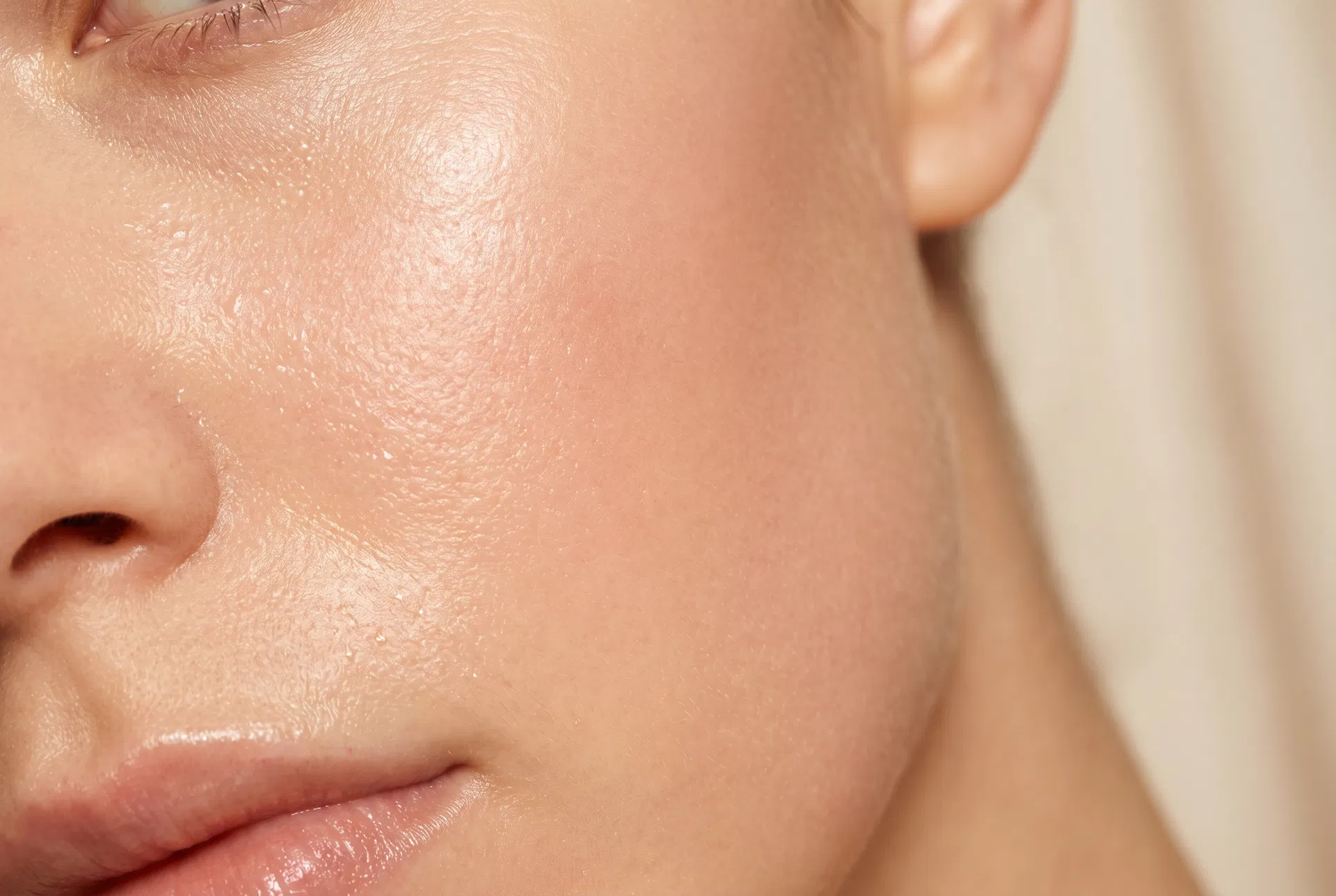
A facial peel in Marylebone costs from £150 at Mesglo, and the right one depends less on your budget than on how many days you are willing to look like you have had something done. We use three: the Obagi Blue Radiance Peel from £150, the Messenger Peel from £180 and the Cosmelan protocol from £650. This guide sets out what each one actually contains, what happens to your skin afterwards, and which of the three we would talk you out of.
Facial peel, chemical peel, skin peel: is there a difference?
No. The three names describe the same treatment, and clinics use them interchangeably. A peel is a solution of acids or actives applied to cleansed skin for a controlled length of time, which loosens the bonds between dead surface cells and prompts the skin underneath to renew faster than it otherwise would.
What separates one peel from another is depth and mechanism. Depth is how far into the skin the solution works: surface only, or into the upper dermis. Mechanism is what the formula is trying to do once it is there, and this is where the three peels we use genuinely part company. Two of them exfoliate. The third one interrupts pigment production, which is a different job entirely.
The three peels we use at Baker Street
Prices are per session and include the consultation and the skin assessment that decides which peel you are suitable for.
| Peel | Main actives | What it is for | Time in clinic | What you look like after | From |
|---|---|---|---|---|---|
| Obagi Blue Radiance | 20% salicylic, 2% glycolic, 2% lactic | Oily and congested skin, breakouts, dullness, upkeep | 30 to 45 minutes | Slightly pink for an hour or two, no flaking | £150 |
| Messenger Peel | Lactic, mandelic, azelaic and phytic acids with niacinamide and glutathione | Acne, uneven tone, texture, early pigmentation | 30 to 45 minutes | Light dryness and tightness for a few days | £180 |
| Cosmelan | Two phase depigmenting system from mesoestetic | Melasma and stubborn hyperpigmentation | 60 to 90 minutes | 5 to 7 days of visible peeling and redness | £650 |
Obagi Blue Radiance: the one you can have on a Thursday
The Obagi Blue Radiance Peel is a superficial peel built around 20 per cent salicylic acid, with 2 per cent glycolic and 2 per cent lactic acid alongside it. Salicylic acid is oil soluble, which is the reason this peel behaves so well on skin that gets congested: it travels into the pore rather than sitting on top of it.
It suits oily and acne prone skin, blocked pores, post spot marks, dullness before an event, and anyone who wants their skin kept in order without ever explaining themselves at work. It is safe across all skin tones, including Fitzpatrick IV to VI, because salicylic acid carries a lower risk of post inflammatory pigmentation than the older TCA style peels do.
One session brightens. The change people actually notice, in pore size and breakout frequency, arrives over a course of three to six sessions spaced four to six weeks apart. It is also the sensible way to prepare skin that is heading for something stronger later.
If you have never had a peel and you are nervous, start here. Nobody has ever been talked out of skincare by a treatment that made them look tired for a week, but plenty of people have.
Messenger Peel: regenerative rather than aggressive
The Messenger Peel is made by Biopark Medical and it is worth being precise about what is in it, because a lot of what is written online about peels of this name is wrong. It is not a TCA peel. The formulation is a blend of lactic and mandelic acids, azelaic and phytic acids, hyaluronic acid, niacinamide and glutathione, chosen to exfoliate and to feed the repair process at the same time.
Mandelic acid is the reason it works on darker skin. Its molecule is large, so it penetrates slowly and evenly, which keeps the risk of post inflammatory hyperpigmentation low. Azelaic acid does two jobs at once, quieting inflammation and slowing melanin production, which is why this peel earns its place on skin that is dealing with acne and the marks acne leaves behind.
There are two variants and your practitioner picks between them at the consultation. Messenger Peel Soft is for sensitive, dry and rosacea prone skin. Messenger Peel Strong is for oily, combination and acne prone skin, and exfoliates harder while regulating sebum.
Something is visible after the first session. The full effect is a course of four to six, and the recovery is mild: some tightness and light dryness, not the sheet peeling people imagine when they hear the word peel.
Cosmelan: the only one of the three that is built for melasma
The Cosmelan protocol from mesoestetic is not really a peel in the exfoliating sense, and thinking of it as one leads people to expect the wrong thing. It is a depigmenting system that works by interrupting tyrosinase, the enzyme that starts melanin production, while clearing the pigment already sitting in the skin.
It runs in two phases. Phase one is the mask, applied at the clinic and left on for a prescribed length of time that you complete at home. Phase two is a daily home care regime with Cosmelan 2 that continues for months. That second phase is not optional and it is not a suggestion. Melasma is hormonally driven and it returns the moment the pressure comes off, so a client who cannot commit to the home care is not a good candidate however much they want the result.
Expect five to seven days of peeling and redness after the mask comes off, then a clearer complexion developing over two to four weeks as the skin renews. It is safe across all Fitzpatrick types, which matters, because melasma is most common in exactly the skin tones that older pigment treatments were riskiest on.
If your pigmentation is superficial sun damage rather than melasma, this is the wrong treatment and it is four times the price of the right one. Say so at the consultation and we will point you at the Messenger Peel or a lighter skin peel instead.
Which one suits you
Match the concern first, then look at the downtime column, then look at the price. In that order, because a cheap peel that does not address your concern is not cheap.
| What is bothering you | The peel we would use | Days you will look different |
|---|---|---|
| Oily skin, blocked pores, active breakouts | Obagi Blue Radiance | None |
| Dull skin before a wedding or an event | Obagi Blue Radiance | None |
| Acne with marks left behind | Messenger Peel Strong | Two to three, mild |
| Sensitive or rosacea prone skin that still needs exfoliation | Messenger Peel Soft | Two to three, mild |
| Uneven tone and rough texture | Messenger Peel | Two to three, mild |
| Melasma, or pigmentation that came back after everything else | Cosmelan | Five to seven |
| Sun spots and age spots on otherwise even skin | Messenger Peel first, Cosmelan only if it holds out | Two to three |
What the appointment is actually like
Nobody describes this part and it is the part people ask about in the room.
You come in with a clean face and no make up. Rahena goes through your medical history, any actives you are using at home, recent sun exposure and whether you are on anything that thins the skin. The skin is then double cleansed and degreased, which is the step that decides how evenly the acid sits, and your eyes and lips are protected.
The solution goes on in layers. You will feel warmth and a mild sting that builds over the first minute and then settles. On an Obagi peel that is roughly the whole experience. On a Cosmelan mask it is longer and more intense, and you leave the clinic with the mask still on and clear instructions about when to remove it.
Afterwards the skin is calmed and you are sent home with SPF 50 and a short list of what not to do. Total chair time is 30 to 45 minutes for the two exfoliating peels and 60 to 90 minutes for Cosmelan.
What a course costs, not just a session
Peels are priced per session but they work in courses, so the honest number is the course number. These are our prices at Baker Street and they are the same whether you book one or six.
| Peel | Per session | Typical course | Course at our prices |
|---|---|---|---|
| Obagi Blue Radiance | £150 | 3 to 6 sessions, 4 to 6 weeks apart | £450 to £900 |
| Messenger Peel | £180 | 4 to 6 sessions | £720 to £1,080 |
| Cosmelan | £650 | One in clinic phase plus months of home care | £650 plus home care products |
Aftercare, and the two mistakes that waste the money
The first mistake is the sun. A peel removes the layer that was doing part of your UV defending, and pigment cells respond to that by producing more melanin, not less. Going on holiday four days after a peel is the single most reliable way to turn a pigmentation treatment into a pigmentation problem. Broad spectrum SPF 50 every morning is not a nice extra here, it is the treatment continuing.
The second is picking. When flaking starts, and on the Messenger and Cosmelan protocols it will, the skin underneath is not finished. Lifting it early is how people end up with a mark that outlasts the thing they came in to treat.
Otherwise the rules are short. No retinoids, acids or scrubs for a week either side. No hot yoga, sauna or steam for 48 hours. Keep make up off for 24 hours after an Obagi peel and longer after the others. Moisturise more often than feels necessary.
Who should not have a peel, in our view
This is the section most peel guides leave out, and it is the one that saves people money.
We will not peel you if you are pregnant or breastfeeding, if you have an active cold sore or any skin infection in the area, if you have taken isotretinoin in the last six months, or if you have been in strong sun in the past fortnight. Skin with an already damaged barrier, which usually means somebody has been over exfoliating at home, needs six to eight weeks of repair before a peel is worth doing at all.
There is also a group who are suitable and still should not book. If your main concern is volume loss, sagging along the jaw, or lines that sit there when your face is at rest, a peel will not touch it. Surface treatments improve the surface. Look at Profhilo or skin tightening for that, and let a peel be the thing that keeps the surface good afterwards.
A peel, or something else?
Peels are not the only route to better skin quality, and they are not always the fastest one for a given concern.
Microneedling works mechanically rather than chemically, creating controlled micro injuries that drive collagen. It has the edge on textural scarring and on skin that has thinned with age. We compare the two properly in microneedling versus chemical peels.
Exosome therapy and mesotherapy deliver signalling molecules and nutrients into the skin rather than taking anything off it, which makes them a natural pairing after a peel rather than an alternative to one. The Cosmelan protocol in particular tolerates exosome support well during the recovery weeks.
For pigmentation specifically, read Cosmelan compared with standard chemical peels and, if melasma is the diagnosis, our melasma guide. If you are choosing between the two strongest options we run, Messenger versus Cosmelan sets them side by side.
Choosing a clinic for a peel in Marylebone
Marylebone and the streets around Harley Street hold an unusual concentration of aesthetic clinics, and peel prices across them vary more than the products do. Three things are worth checking before you book anywhere.
Ask who is applying it and what they are qualified to do. Peels are frequently delegated, and the difference between a good result and a burn is judgement about depth on your particular skin. At Mesglo every peel is applied by Rahena, who holds the Level 7 Diploma in aesthetic medicine, the highest Ofqual regulated qualification in UK aesthetics, and is ACE Group World certified for complication management.
Ask what happens if it goes wrong. A clinic that cannot answer that question quickly has not thought about it.
Ask whether the consultation is a consultation or a sales appointment. You should leave knowing which peel is right for you, including the possibility that the answer is none of them yet.
We are at 4 Baker Street, London W1H 6AZ, a few minutes from Baker Street and Bond Street stations. If you want to see how the clinic compares with others in the area first, Harley Street versus Marylebone is an honest read of both.
Conclusion
Most people arrive asking which peel is best and leave understanding that the question is which peel is right for the thing they came in about. Congestion and dullness get the Obagi Blue Radiance Peel and no time off. Acne, marks and texture get the Messenger Peel. Melasma gets Cosmelan, a week of peeling and a genuine commitment to the home care that follows. If you are not sure which of those describes you, that is what the consultation is for. You can also read across our other pigmentation guides or look at the full range of skin treatments we offer at the Marylebone clinic.
Frequently Asked Questions
- How much is a facial peel in Marylebone?
- At Mesglo on Baker Street, a facial peel starts from £150 for the Obagi Blue Radiance Peel, £180 for the Messenger Peel and £650 for the Cosmelan protocol. The consultation and skin assessment are included. Most people are working to a course rather than a single session, so the realistic budget is £450 to £900 for a course of Obagi and £720 to £1,080 for a course of Messenger.
- Which chemical peel is safest for darker skin tones?
- The Obagi Blue Radiance Peel and the Messenger Peel are both suitable for Fitzpatrick IV to VI. Salicylic acid and mandelic acid penetrate in a way that keeps the risk of post inflammatory hyperpigmentation low. Cosmelan is also safe across all skin types and is often the right choice for melasma, which is more common in darker complexions. Any peel on darker skin should follow a proper assessment and, where there is doubt, a patch test.
- Will I visibly peel afterwards?
- Not after an Obagi Blue Radiance Peel. Expect an hour or two of pinkness and nothing anyone else will notice. The Messenger Peel usually brings light dryness and tightness for two or three days rather than sheet peeling. Cosmelan is the one that genuinely peels, with five to seven days of flaking and redness after the mask comes off.
- How soon can I wear make up after a peel?
- Leave the skin bare for 24 hours after an Obagi Blue Radiance Peel. After a Messenger Peel give it 48 hours and use something light and non comedogenic when you go back to it. After Cosmelan, follow the specific instructions given with your home care protocol, because make up over actively peeling skin interferes with how evenly it sheds.
- How often can I have a chemical peel?
- The Obagi Blue Radiance Peel can be repeated every four to six weeks indefinitely as maintenance. The Messenger Peel runs as a course of four to six sessions at similar intervals. Cosmelan is a single in clinic phase followed by a long home care programme, and a second in clinic application is rarely needed if the maintenance is followed.
- Can I have a peel in the summer?
- Yes, but the sun rules stop being advice and become the treatment. Broad spectrum SPF 50 every morning, reapplied, and no sunbathing at all during the course. If you have a beach holiday booked inside the next three weeks, move the peel rather than the holiday. This matters most for the pigmentation protocols, where sun exposure during recovery can undo the whole course.
- Is a chemical peel painful?
- It stings rather than hurts. Warmth builds over the first minute and settles after that, and the stronger the peel the more you feel it. Most people describe the Obagi peel as a tingle and the Cosmelan mask as a hot, tight sensation that is uncomfortable rather than painful. No anaesthetic is used or needed.
- What is the difference between a facial and a chemical peel?
- A facial is a treatment of the skin surface using products at cosmetic strength, and its effects are largely temporary. A chemical peel uses professional strength acids at concentrations that are only legally available through a trained practitioner, and it changes how quickly the skin renews for weeks afterwards. A facial makes your skin look good on the day. A peel changes the skin.
- Does the Messenger Peel contain TCA?
- No. The Messenger Peel by Biopark Medical is built on lactic, mandelic, azelaic and phytic acids with hyaluronic acid, niacinamide and glutathione. It is a regenerative formulation rather than a TCA resurfacing peel, which is why the recovery is mild despite the results being visible from the first session.
- Can I have a peel if I use retinol at home?
- Yes, but stop it a week before and leave it a week afterwards. Retinoids thin the outer layer and stack with the acids, which raises the chance of an uneven or excessive result. Tell your practitioner exactly what you are using and at what strength, including anything bought online, because it changes the depth judgement.
Related Treatments at Mesglo London
Related Articles You May Find Useful
- How Lumi Eyes Treatment Transforms Dark Circles and Under-Eye Concerns (Skin Treatments)
- The Benefits of Mesotherapy for Skin Rejuvenation (Skin Treatments)
- Cosmelan Peel vs Chemical Peels: Which Pigmentation Treatment Works Best? (Skin Treatments)
- Skinfill Bacio vs Lip Filler: Which Lip Treatment Is Right for You? (Lip Treatments)
Book a consultation at Mesglo London to discuss this treatment.
View our before and after results to see real patient outcomes.
Browse all articles on the Mesglo London blog for more expert insights.