Microneedling vs Chemical Peels: Which Skin Treatment Is Right for You?
Written by Rahena, Level 7 Aesthetic Practitioner | Mesglo London
Published
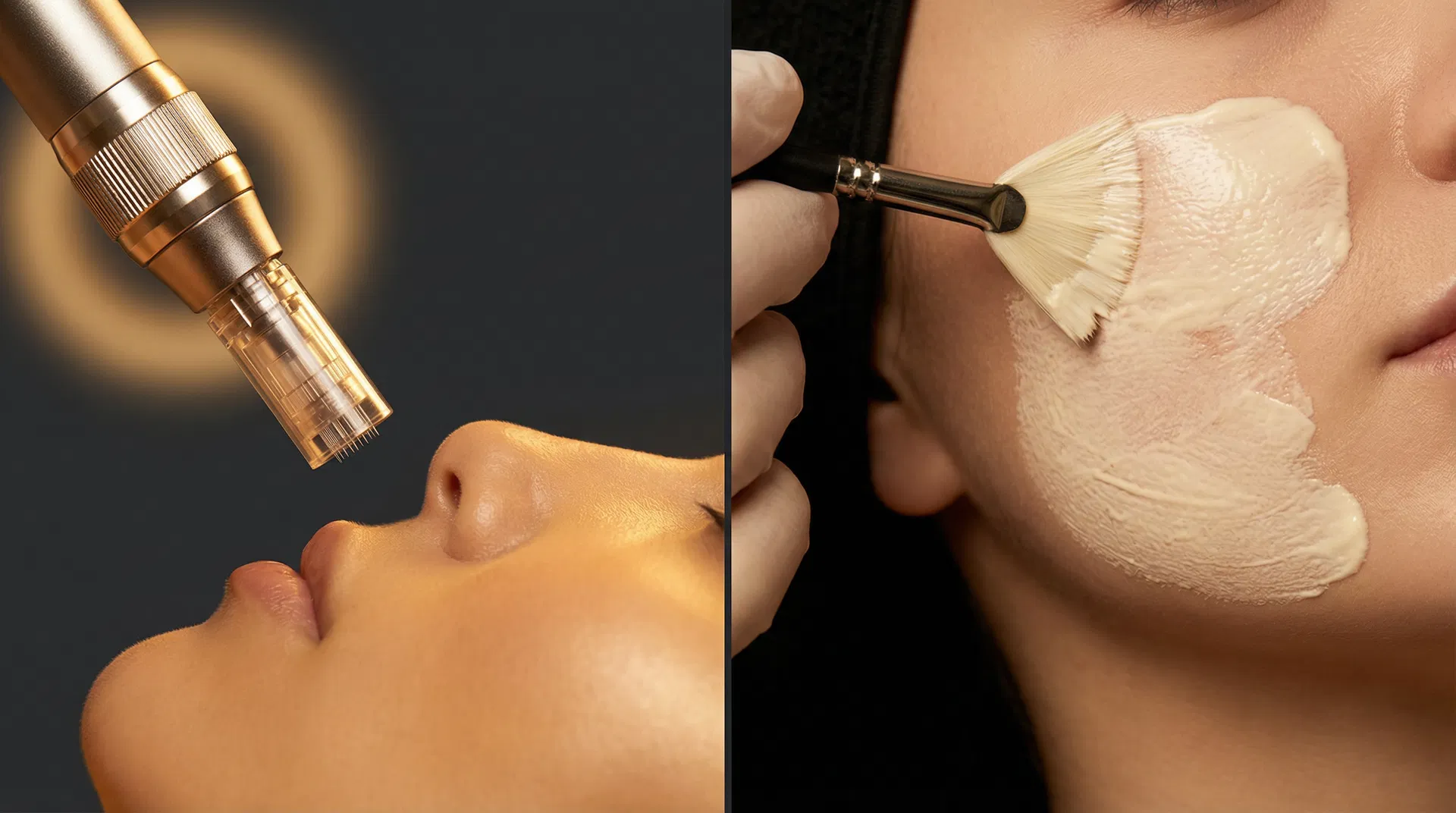
When it comes to skin rejuvenation, two of the most popular treatments at aesthetic clinics across London are microneedling and chemical peels. Both deliver impressive results for concerns ranging from acne scarring and pigmentation to fine lines and dull skin tone, yet they work through fundamentally different mechanisms. At Mesglo London in Marylebone, we offer both treatments and frequently help patients decide which approach, or combination of both, will best address their individual skin goals. This comprehensive guide compares microneedling and chemical peels across every factor that matters: how they work, what they treat, expected downtime, cost, pain levels, and long-term results.
How Microneedling Works
Microneedling, also known as collagen induction therapy, uses a device fitted with fine sterile needles to create thousands of controlled micro-injuries in the skin's surface. These micro-channels trigger the body's natural wound-healing response, stimulating the production of new collagen and elastin: the structural proteins responsible for firm, smooth, youthful-looking skin.
At Mesglo London, we use advanced microneedling devices that allow precise control over needle depth (typically 0.5mm to 2.5mm), enabling us to tailor each session to the patient's specific concerns and skin area. The treatment can be enhanced with topical serums, growth factors, or exosomes applied during the procedure, which are driven deeper into the skin through the micro-channels for amplified results.
- Stimulates natural collagen and elastin production for long-term skin remodelling
- Effective on all skin types, including darker skin tones (Fitzpatrick IV-VI)
- Can be combined with collagen-stimulating treatments such as exosomes and polynucleotides
- Treats acne scars, surgical scars, stretch marks, and enlarged pores
- Minimal risk of post-inflammatory hyperpigmentation when performed correctly
- Results improve progressively over 3-6 months as new collagen matures
How Chemical Peels Work
Chemical peels use carefully formulated acid solutions to dissolve the bonds between dead and damaged skin cells, causing controlled exfoliation of the skin's outer layers. As the treated skin peels away over the following days, fresh, healthier skin is revealed beneath. The depth of the peel (superficial, medium, or deep) determines the intensity of results and the recovery period.
Common active ingredients include glycolic acid (an alpha-hydroxy acid), salicylic acid (a beta-hydroxy acid), trichloroacetic acid (TCA), and specialised formulations such as the Cosmelan depigmentation system. Each targets different skin concerns and operates at different depths within the epidermis and dermis.
- Immediate improvement in skin brightness and texture after a single session
- Highly effective for pigmentation, melasma, and sun damage
- Range of intensities available from gentle lunchtime peels to deep resurfacing
- Excellent for treating active acne and reducing breakouts
- Can address fine lines and superficial wrinkles
- Relatively quick treatment time (15-45 minutes depending on peel type)
Microneedling vs Chemical Peels: Head-to-Head Comparison
The following table provides a comprehensive side-by-side comparison of microneedling and chemical peels across the most important factors patients consider when choosing between these two popular skin treatments.
| Factor | Microneedling | Chemical Peels |
|---|---|---|
| Mechanism | Collagen induction via micro-injuries | Chemical exfoliation of skin layers |
| Best For | Scarring, texture, pores, skin laxity | Pigmentation, brightness, acne, fine lines |
| Skin Types | All skin types including darker tones | Best for lighter to medium skin tones |
| Treatment Time | 45-60 minutes | 15-45 minutes |
| Downtime | 2-5 days redness and mild peeling | 1-14 days depending on peel depth |
| Pain Level | Mild to moderate (numbing cream applied) | Mild stinging to moderate burning |
| Sessions Needed | 3-6 sessions, 4-6 weeks apart | 3-6 for superficial; 1-3 for medium/deep |
| Results Timeline | Progressive over 3-6 months | Visible within 1-2 weeks after peeling |
| Collagen Stimulation | Significant, long-lasting | Moderate (medium/deep peels only) |
| Can Combine with Serums | Yes: exosomes, growth factors, HA | No: active acids prevent additions |
| Seasonal Restrictions | Minimal (SPF required) | Best avoided in peak summer |
| Cost per Session at Mesglo London | From £200 | From £150, depending on the peel |
Which Skin Concerns Does Each Treatment Address Best?
Understanding which treatment excels for specific concerns helps you make the most informed choice. Here we break down the key skin concerns and identify the superior treatment for each.
Acne Scarring
Winner: Microneedling. For acne scar treatment, microneedling is generally the superior choice. The controlled micro-injuries stimulate collagen remodelling at the dermal level, gradually filling in depressed scars (ice pick, boxcar, and rolling scars) from within. Chemical peels can improve the appearance of superficial scarring and post-inflammatory marks but are less effective for deeper, textured acne scars.
Pigmentation and Melasma
Winner: Chemical Peels. When the primary concern is pigmentation or uneven skin tone, chemical peels typically deliver faster, more targeted results. Specialised depigmentation peels such as Cosmelan work by inhibiting melanin production at the cellular level while simultaneously removing pigmented surface cells.
Fine Lines and Wrinkles
Winner: Microneedling (for deeper lines); Chemical Peels (for superficial lines). Both treatments address fine lines effectively, but through different pathways. Microneedling's collagen-stimulating action provides deeper structural improvement over time. Superficial chemical peels smooth fine surface lines quickly. For comprehensive anti-ageing treatment, many patients benefit from combining both approaches.
Skin Texture and Enlarged Pores
Winner: Microneedling. The collagen remodelling triggered by microneedling physically tightens and refines the skin's surface, reducing pore size and improving overall texture. While chemical peels can temporarily refine texture by removing dead skin buildup, microneedling delivers more lasting structural changes.
Dull, Tired-Looking Skin
Winner: Chemical Peels. For an immediate radiance boost, chemical peels are hard to beat. By stripping away the dull, dead surface layer, peels reveal the fresh, luminous skin beneath, often after just one session. This makes them an excellent choice for pre-event skin preparation.
Active Acne
Winner: Chemical Peels. Salicylic acid peels are particularly effective for active acne, as the beta-hydroxy acid penetrates into pores to dissolve excess sebum and reduce bacterial load. Microneedling should generally be avoided on actively inflamed acne, as needling through pustules can spread bacteria and worsen breakouts.
Combining Microneedling and Chemical Peels
At Mesglo London, we frequently recommend alternating between microneedling and chemical peels as part of a comprehensive skin maintenance programme. This combination approach allows patients to benefit from both collagen stimulation and targeted exfoliation, addressing multiple concerns simultaneously.
- A course of 3-4 microneedling sessions spaced 4-6 weeks apart for collagen building
- Superficial chemical peels between microneedling sessions (at least 2 weeks apart) for brightness and pigmentation
- Maintenance treatments every 6-8 weeks alternating between the two modalities
Enhancing Results with Regenerative Treatments
One of the most exciting developments in aesthetic medicine is the ability to enhance microneedling results with regenerative therapies. At Mesglo London, we offer microneedling combined with exosome therapy, where growth factor-rich exosomes are applied to the skin immediately after needling. The micro-channels created during treatment allow these powerful regenerative signals to penetrate deep into the dermis, dramatically amplifying collagen production and accelerating healing.
Similarly, polynucleotide treatments can be combined with microneedling to provide both structural scaffolding and cellular regeneration. This combination represents the cutting edge of collagen stimulation therapy and delivers results that neither treatment could achieve alone.
Recovery and Aftercare Compared
Understanding the recovery timeline for each treatment helps you plan around your schedule and social commitments. The following table compares recovery factors across microneedling, superficial peels, and medium-depth peels.
| Recovery Factor | Microneedling | Superficial Peel | Medium Peel |
|---|---|---|---|
| Redness Duration | 24-72 hours | 2-4 hours | 3-7 days |
| Peeling/Flaking | Mild, days 2-4 | Minimal | Moderate, days 3-7 |
| Return to Work | Next day (with makeup) | Same day | 5-7 days |
| Exercise Restriction | 24-48 hours | None | 48-72 hours |
| Sun Exposure | Avoid 2 weeks, SPF 50 | SPF 30+ for 1 week | Avoid 4 weeks, SPF 50 |
| Makeup Application | After 24 hours | Same day | After 5-7 days |
| Skincare Restrictions | No actives for 5-7 days | No actives for 24-48 hours | No actives for 7-14 days |
Who Should Choose Microneedling?
Microneedling is the better choice if your primary concerns align with the treatment's strengths in collagen stimulation and skin remodelling.
- Have moderate to severe acne scarring or textured skin
- Want long-term collagen stimulation and skin remodelling
- Have a darker skin tone (Fitzpatrick IV-VI) where chemical peels carry higher pigmentation risk
- Are interested in combining treatment with exosomes or growth factors
- Want to address early skin laxity alongside texture concerns
- Have enlarged pores that you want to permanently reduce
Who Should Choose Chemical Peels?
Chemical peels are the better choice if your goals centre on pigmentation correction, immediate brightness, or acne management.
- Have pigmentation, melasma, or sun damage as your primary concern
- Want immediate visible results with minimal downtime (superficial peels)
- Are preparing for a special event and need a quick radiance boost
- Have active acne that needs to be controlled
- Prefer a treatment with a shorter session time
- Have superficial fine lines rather than deeper wrinkles
Cost Comparison in London
Both treatments offer excellent value, with pricing that varies based on the specific protocol and treatment area. At Mesglo London, we offer competitive pricing and package discounts for courses of treatment.
| Treatment at Mesglo London | Price per session | Typical course |
|---|---|---|
| Microneedling | From £200 | A course, usually three to six sessions |
| Skin Peels (superficial) | From £150 | A course, usually three to six sessions |
| Obagi Blue Radiance Peel | From £150 | A course of three to six, then maintenance |
| Messenger Peel | From £180 | A course of four to six sessions |
| Cosmelan Depigmentation Peel | From £650 | A single in-clinic protocol plus home maintenance |
Conclusion
Choosing between microneedling and chemical peels, or determining the optimal combination, depends on your unique skin type, concerns, and goals. At Mesglo London in Marylebone, our experienced practitioners will assess your skin during a thorough consultation and recommend a personalised treatment plan designed to deliver the best possible results. Whether you are looking to address acne scarring, pigmentation, fine lines, or simply want healthier, more radiant skin, we have the expertise and technology to help you achieve your goals. Book your consultation today to begin your skin transformation journey. Compare all our treatments side by side to explore your options, or browse our skin treatment articles for more expert insights.
Frequently Asked Questions
- Can I have microneedling and a chemical peel on the same day?
- No. These treatments should never be performed on the same day. We recommend waiting at least two weeks between a chemical peel and microneedling session to allow the skin to fully recover. Performing both simultaneously would cause excessive trauma and significantly increase the risk of complications.
- Which treatment is better for anti-ageing?
- For comprehensive anti-ageing, microneedling generally provides superior long-term results due to its collagen-stimulating mechanism. However, the best approach often combines both treatments: microneedling for structural improvement and chemical peels for surface refinement. Read our guide on the best anti-ageing treatments in London for more detailed recommendations.
- Are microneedling and chemical peels safe for darker skin tones?
- Microneedling is generally safe for all skin types including darker tones, as it does not target melanin. Chemical peels require more caution with darker skin: superficial peels are usually safe, but medium and deep peels carry a higher risk of post-inflammatory hyperpigmentation. At Mesglo London, we always assess your Fitzpatrick skin type during consultation.
- How many sessions of microneedling or chemical peels will I need?
- Most patients see noticeable improvement after 3 microneedling sessions or 2-3 chemical peel sessions. For significant scarring or deep pigmentation, 4-6 sessions of either treatment may be needed. Your practitioner at Mesglo London will create a personalised treatment plan during your initial consultation.
- Can I combine microneedling with exosome therapy?
- Yes. At Mesglo London, we offer microneedling combined with exosome therapy, where growth factor-rich exosomes are applied immediately after needling. The micro-channels allow deeper penetration for amplified collagen production and faster healing.
- What is the downtime for microneedling vs chemical peels?
- Microneedling typically involves 2-5 days of redness and mild peeling. Superficial chemical peels have minimal downtime (same day return to activities), while medium peels require 5-7 days of recovery with visible peeling.
Related Treatments at Mesglo London
Related Articles You May Find Useful
- How Lumi Eyes Treatment Transforms Dark Circles and Under-Eye Concerns (Skin Treatments)
- The Benefits of Mesotherapy for Skin Rejuvenation (Skin Treatments)
- Cosmelan Peel vs Chemical Peels: Which Pigmentation Treatment Works Best? (Skin Treatments)
- Skinfill Bacio vs Lip Filler: Which Lip Treatment Is Right for You? (Lip Treatments)
Book a consultation at Mesglo London to discuss this treatment.
View our before and after results to see real patient outcomes.
Browse all articles on the Mesglo London blog for more expert insights.