Exosome Therapy vs Polynucleotides: Which Regenerative Treatment Is Right for You?
Written by Rahena, Level 7 Aesthetic Practitioner | Mesglo London
Published
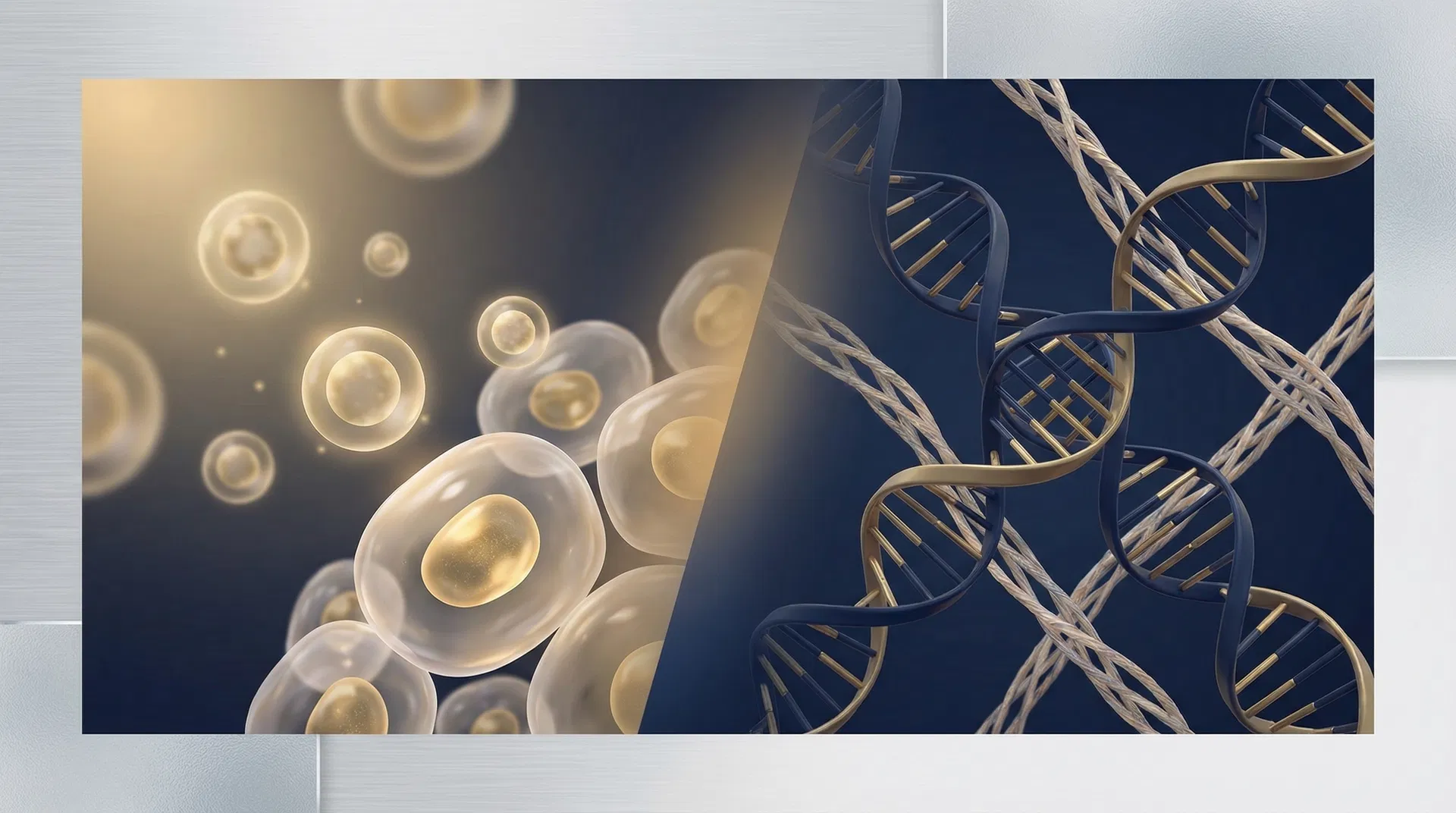
Compare Exosome Therapy and Polynucleotide treatments head-to-head. Understand the differences in mechanism, cost, and results to choose the right regenerative treatment for your skin concerns in London.
Understanding Exosome Therapy: The Messengers of Regeneration
Exosome therapy represents a significant advancement in regenerative aesthetics. It harnesses the power of exosomes, which are tiny vesicles that cells use to communicate with each other. Think of them as microscopic envelopes carrying vital information (proteins, growth factors, and lipids) from one cell to another. This process is fundamental to how our bodies heal and regenerate tissues.
When used in an aesthetic context, exosomes derived from stem cells are applied to the skin to kickstart its natural repair mechanisms. By delivering a potent cocktail of regenerative ingredients directly to your skin cells, exosome therapy can dramatically improve skin health and appearance. It is a powerful option for anyone looking to address a wide range of concerns, from signs of ageing to inflammatory conditions. For a deeper dive into this treatment, explore our [complete guide to exosome therapy](/blog/exosome-therapy-complete-guide/).
How Does Exosome Therapy Work?
Exosome therapy works by leveraging the innate signalling pathways of the body. The treatment, often delivered following a procedure like microneedling which creates micro-channels in the skin, allows the exosomes to penetrate deeply. Once absorbed, they instruct the recipient cells to behave in a more youthful and healthy manner.
This cellular communication triggers a cascade of regenerative effects. The exosomes signal fibroblasts to increase the production of collagen and elastin, the two proteins responsible for skin firmness and elasticity. They also have powerful anti-inflammatory properties, which can help to calm irritated skin and reduce redness. This makes the [Exosome Face Treatment in London](/exosome-face-london/) an excellent choice for clients dealing with conditions like rosacea or acne.
Unpacking Polynucleotide Treatments: The Building Blocks of Skin
Polynucleotides are another exciting frontier in regenerative medicine, but they work in a fundamentally different way. While exosomes are the messengers, polynucleotides are the raw materials. They are long chains of nucleotides, the very building blocks of DNA and RNA, extracted and purified from salmon or trout DNA, which is remarkably compatible with human DNA.
When injected into the skin, these polynucleotide chains act as a biostimulator and a structural scaffold. They signal the body to ramp up its own regenerative processes, leading to improved skin health from the inside out. This makes them a fantastic option for tackling concerns related to skin quality, hydration, and structural integrity. The treatment is particularly renowned for its ability to rejuvenate difficult-to-treat areas, such as under the eyes.
How Do Polynucleotide Treatments Work?
The mechanism behind polynucleotides is twofold. Firstly, they have a powerful hydrating effect. The molecules are hydrophilic, meaning they attract and bind water molecules within the skin, leading to deep and lasting hydration. This plumps the skin, smooths fine lines, and gives it a radiant glow.
Secondly, and more importantly, they stimulate fibroblasts to produce fresh collagen and elastin. By providing the necessary building blocks and creating an optimal environment for cellular activity, the [Polynucleotide Face Treatment in London](/polynucleotide-face-london/) effectively encourages the skin to repair and rebuild itself. This process improves skin density, firmness, and elasticity over time. It’s a different approach compared to other injectables, as explored in our article comparing [polynucleotides vs. PRP](/blog/polynucleotide-vs-prp-which-is-better/).
Exosomes vs. Polynucleotides: A Head-to-Head Comparison
To help you decide which treatment is right for you, let's break down the key differences and similarities in a direct comparison.
| Feature | Exosome Therapy | Polynucleotide Treatment |
|---|---|---|
| Primary Function | Cellular communication and signalling | Provides building blocks for regeneration |
| Source | Stem Cells | Salmon/Trout DNA |
| Mechanism of Action | Delivers growth factors and proteins to instruct cell behaviour | Stimulates fibroblasts and provides raw materials for collagen synthesis |
| Method of Delivery | Topical application, often post-microneedling | Injections |
| Key Benefits | Reduces inflammation, promotes healing, improves pigmentation, stimulates collagen | Deep hydration, improves skin elasticity, reduces fine lines, thickens skin |
| Best For | Ageing skin, sun damage, rosacea, acne, general rejuvenation | Dehydrated skin, fine lines, crepey skin, under-eye circles, preventative ageing |
| Results Timeline | Initial glow within days, with full effects developing over weeks | Gradual improvement over several weeks as collagen is produced |
| Pricing (from) | From £650 | From £300 |
While both treatments are powerfully regenerative, the choice often comes down to the primary concern. For widespread inflammation and cellular repair, exosomes are unparalleled. For targeted structural improvement and deep hydration, especially in delicate areas, polynucleotides are my go-to treatment. - Mesglo London
Who is the Ideal Candidate?
Choosing between these two advanced treatments depends heavily on your individual skin goals and conditions. Here’s a closer look at who is best suited for each.
Ideal Candidates for Exosome Therapy
Exosome therapy is a versatile treatment that can benefit a wide range of individuals. You are an ideal candidate if you are looking to:
Ideal Candidates for Polynucleotide Treatments
Polynucleotide treatments are perfect for those who need to rebuild their skin's foundation. You are an ideal candidate if you want to:
Combination Protocols: The Best of Both Worlds
One of the most exciting developments in regenerative aesthetics is the use of combination protocols. Rather than choosing one treatment over the other, we can leverage the unique strengths of both exosomes and polynucleotides to deliver truly comprehensive and synergistic results. This approach allows us to address multiple skin concerns simultaneously, from cellular communication and repair to structural integrity and hydration.
At our clinic in Marylebone, London, we often design bespoke treatment plans that incorporate both modalities. For example, a typical protocol might involve a course of polynucleotide injections to rebuild the skin's scaffold and improve hydration, followed by exosome therapy to accelerate healing, reduce inflammation, and enhance the overall regenerative effect. This powerful combination can lead to more profound and longer-lasting results than either treatment could achieve alone. To explore your options, you can use our [treatment comparison tool](/compare-treatments/).
| Session | Treatment | Purpose |
|---|---|---|
| Week 1 | Polynucleotide Injections (Session 1) | Initiate collagen stimulation and deep hydration. |
| Week 3 | Polynucleotide Injections (Session 2) | Continue building the skin's structural foundation. |
| Week 5 | Microneedling with Exosome Therapy | Deliver regenerative signals, reduce inflammation, and enhance the effects of the polynucleotides. |
| Week 9 | Follow-up Consultation | Assess results and plan for maintenance. |
Conclusion
Choosing between exosome therapy and polynucleotide treatments is not about picking a 'winner', but about understanding which tool is best suited for the job at hand. Both are exceptional, scientifically-backed treatments that represent the future of aesthetic medicine. They offer a way to achieve natural, long-lasting results by working with your body, not against it. Whether you are drawn to the cellular signalling power of exosomes or the foundational support of polynucleotides, the best first step is a thorough consultation. At Mesglo London, our experts in regenerative aesthetics are here to guide you. We will assess your skin, listen to your goals, and create a personalised treatment plan that is right for you. We are conveniently located in Marylebone, London, and are ready to help you unlock your skin's full potential. Ready to explore the possibilities of regenerative aesthetics? [Book your consultation](/booking/) with us today and discover which treatment will best serve your skin.
Frequently Asked Questions
- What is the main difference between exosomes and polynucleotides?
- The primary difference lies in their function and origin. Exosomes are cellular messengers derived from stem cells that instruct your skin cells to regenerate and repair. Polynucleotides are fragments of salmon DNA that act as the raw materials or building blocks for your skin to build new collagen and hydrate itself.
- How many treatments will I need?
- For polynucleotide treatments, a course of 2-3 sessions spaced 2-4 weeks apart is typically recommended for optimal results. For exosome therapy, the number of sessions can vary depending on whether it is a standalone treatment or combined with another procedure like microneedling. A single session can produce significant improvements, but a series may be recommended for more advanced concerns.
- Are the treatments painful?
- Both treatments are generally well-tolerated. For polynucleotide injections, a topical numbing cream is applied beforehand to minimise discomfort. The injections themselves are very small and quick. Exosome therapy is applied topically and is not painful, although the accompanying microneedling procedure may cause mild discomfort, which is also managed with numbing cream.
- Is there any downtime?
- Downtime for both treatments is minimal. With polynucleotide injections, you may experience some small bumps at the injection sites, which typically resolve within 24-48 hours. With exosome therapy, any downtime is usually related to the microneedling procedure, which may involve some redness and sensitivity for a day or two.
- How long do the results last?
- The results of both treatments are long-lasting because they stimulate your body's own regenerative processes. For polynucleotides, results can last for 6-12 months, and maintenance sessions are recommended. Exosome therapy results can also be long-lasting, with many clients enjoying the benefits for over a year. A healthy lifestyle and good skincare routine will help to prolong the results of both treatments.
- Can these treatments be used on the body?
- Yes, both exosomes and polynucleotides can be used to treat other areas of the body. Polynucleotides are effective for improving skin quality on the neck, décolletage, and hands. Exosomes can also be used for hair restoration on the scalp.
- Which treatment is better for under-eye circles?
- Polynucleotides are generally considered the superior treatment for the delicate under-eye area. They are excellent for improving skin density, reducing fine lines, and tackling the hollowness and dark circles that can occur under the eyes.
- How much do the treatments cost in London?
- At our W1 clinic, polynucleotide face treatment starts from £300 per session, and polynucleotide hair treatment from £350. Exosome therapy, which is a more complex and potent treatment, starts from £650 per session. Final pricing will be confirmed during your consultation based on your bespoke treatment plan.
Related Treatments at Mesglo London
Related Articles You May Find Useful
- Exosome Therapy: The Complete Guide to Regenerative Aesthetics (Regenerative Treatments)
- Microneedling with Exosomes: The Future of Skin Rejuvenation in London (Regenerative Treatments)
- Best Anti-Ageing Treatments in London: A Regenerative Approach (Regenerative Treatments)
- Skinfill Bacio vs Lip Filler: Which Lip Treatment Is Right for You? (Lip Treatments)
Book a consultation at Mesglo London to discuss this treatment.
View our before and after results to see real patient outcomes.
Browse all articles on the Mesglo London blog for more expert insights.