Microneedling for Scars: The Complete Guide to Collagen Induction Therapy in Marylebone, London
Written by Rahena, Level 7 Aesthetic Practitioner | Mesglo London
Published · Updated
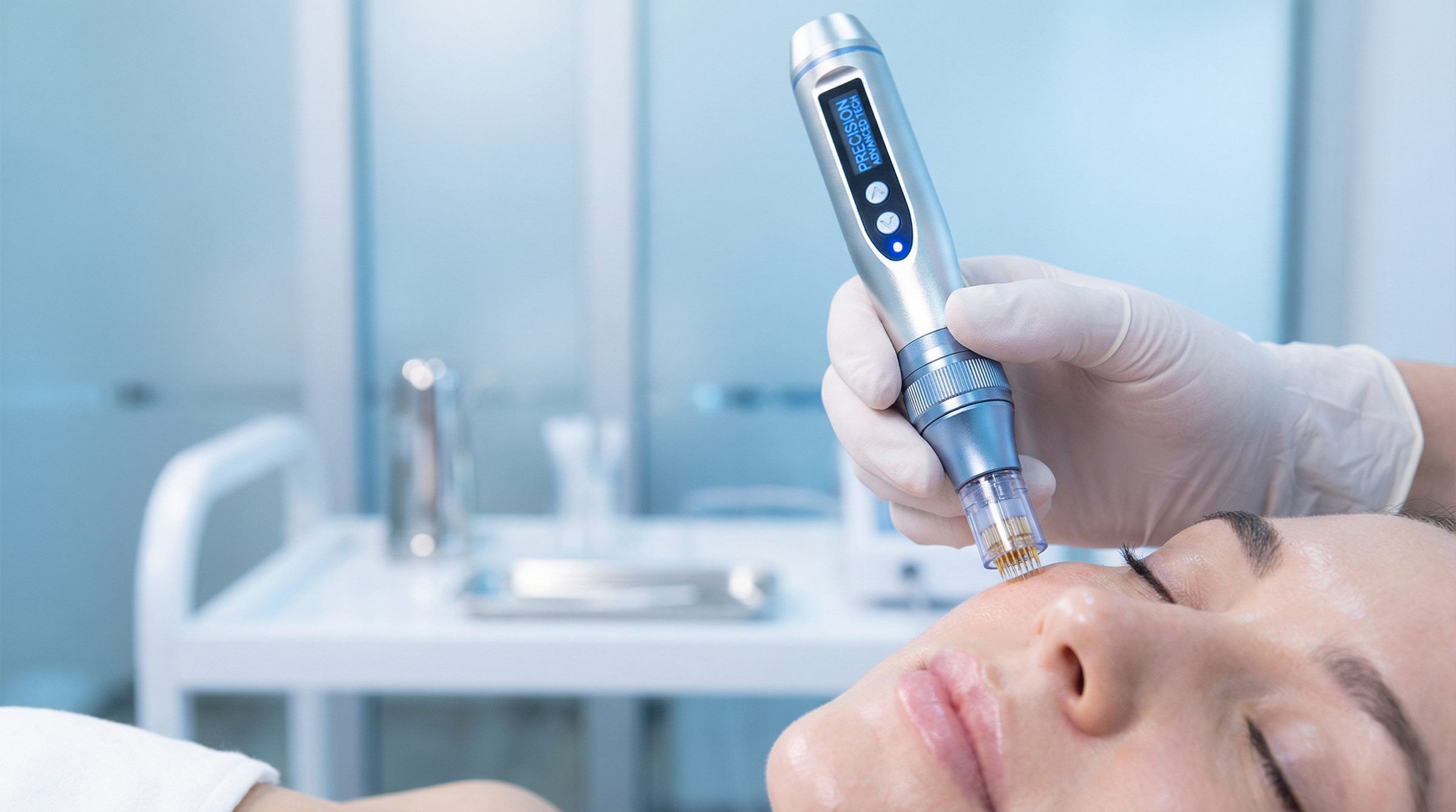
Scars, whether from adolescent acne, a surgical procedure, or an unexpected injury, can often be a lasting and unwanted reminder of the past. While they represent the body’s natural healing ability, their appearance can significantly impact one’s confidence. In a city as aesthetically conscious as London, the demand for effective, minimally invasive scar revision has never been higher. Enter microneedling, a revolutionary treatment also known as Collagen Induction Therapy (CIT). This advanced procedure has firmly established itself as a gold-standard solution for a wide array of scar types, offering a path to smoother, clearer, and more uniform skin. At Mesglo London, our Marylebone clinic specialises in harnessing the body’s own regenerative power to fundamentally repair and resurface scarred tissue. We do not just treat the surface; we go deeper, stimulating the very biological processes that create healthy, new skin. This comprehensive guide will explore the science behind microneedling for scars, how it is tailored for different scar types, and how we are pioneering its combination with powerful regenerative boosters like exosomes and polynucleotides to deliver unparalleled results for our London clientele.
The Science of Scars and the Skin’s Healing Cascade
Understanding how to effectively treat a scar begins with understanding its origin. A scar is the body’s biological response to an injury that penetrates the dermis, the skin’s deeper layer. When the skin is wounded, the body initiates a complex four-stage healing cascade: haemostasis, inflammation, proliferation, and remodelling. In an ideal healing scenario, the new tissue, rich in collagen, would seamlessly blend with the surrounding skin. However, when this process is disrupted, either by producing too much or too little collagen, a visible scar forms.
The overproduction of collagen results in raised, often discoloured hypertrophic or keloid scars, whereas insufficient collagen leads to the pitted, indented appearance characteristic of atrophic scars, such as those commonly seen after severe acne. The architecture of this scar tissue is fundamentally different from that of healthy skin; its collagen fibres are organised in a dense, parallel alignment rather than the flexible, basket-weave pattern of normal tissue, leading to a different texture and appearance. At Mesglo London, our approach is rooted in this deep understanding of skin biology.
Atrophic Scars (Depressed Scars)
Most commonly associated with acne and chickenpox, atrophic scars are characterised by a loss of tissue. They appear as depressions or pits in the skin. This occurs when the healing process fails to regenerate enough collagen to fully fill the area of the original wound. They can be further categorised into three main types: ice pick (deep, narrow pits), boxcar (broad depressions with sharply defined edges), and rolling scars (broad depressions with sloping, wave-like edges).
Microneedling is exceptionally effective for these scars as it directly stimulates the production of new collagen and elastin to fill in these depressions, gradually raising the scar floor to be level with the surrounding skin.
Hypertrophic and Keloid Scars (Raised Scars)
In direct contrast to atrophic scars, hypertrophic and keloid scars are the result of an overproduction of collagen during the healing process. They are raised, thick, and often firm to the touch. The primary difference between them is that hypertrophic scars remain within the boundaries of the original wound, whereas keloid scars can grow and extend far beyond the initial injury site.
While microneedling can be beneficial for hypertrophic scars by helping to break down the excess collagen and remodel the tissue, it must be approached with caution, especially for individuals prone to keloid formation. At our Marylebone clinic, a thorough assessment is conducted to determine the most appropriate treatment programme.
Stretch Marks (Striae)
Stretch marks, or striae, are a form of scarring that occurs when the skin is stretched or shrunk rapidly, such as during pregnancy, puberty, or significant weight fluctuations. This rapid change causes the collagen and elastin fibres in the dermis to rupture.
They often appear first as reddish or purplish lines (striae rubrae) and fade over time to a silvery-white colour (striae albae). Microneedling helps to improve the texture and appearance of stretch marks by stimulating collagen and elastin production within these lines, making them less noticeable and blending them more effectively with the surrounding skin.
| Scar Type | Typical Needle Depth | Recommended Sessions | Key Benefit |
|---|---|---|---|
| Rolling Acne Scars | 1.0mm–2.0mm | 4–6 | Stimulates broad collagen production to lift depressions |
| Boxcar Acne Scars | 1.5mm–2.5mm | 4–6 | Breaks down fibrotic scar tissue and rebuilds the scar floor |
| Ice Pick Acne Scars | 0.5mm–1.5mm (often with other techniques) | 5–7+ | Encourages collagen filling in deep, narrow tracts |
| Surgical Scars | 1.5mm–2.0mm | 3–5 | Remodels disorganised collagen, improving texture and colour |
| Stretch Marks (Striae) | 1.5mm–2.5mm | 4–6 | Boosts elastin and collagen to thicken skin and reduce visibility |
Expert Insight: The key to successful scar treatment is not just about the technology used, but the deep understanding of the specific scar type and the skin’s unique healing potential. A personalised treatment plan is non-negotiable.
Collagen Induction Therapy: How Microneedling Rewrites the Skin’s Past
Microneedling, or Collagen Induction Therapy (CIT), is a cornerstone of modern aesthetic medicine and a powerful tool in our scar revision arsenal at Mesglo London. The principle behind it is elegantly simple yet profoundly effective: it creates thousands of controlled micro-injuries in the skin using a specialised device equipped with fine, sterile needles.
This action might sound counterintuitive, creating injuries to heal an injury, but it is this precise, controlled trauma that kickstarts the body’s dormant healing mechanisms into high gear. Each micro-channel created by the needles acts as a signal to the dermis to initiate the proliferation phase of healing. The body responds by flooding the area with growth factors, stimulating the production of new, high-quality collagen and elastin: the essential building blocks of smooth, healthy skin.
This new collagen network gradually replaces the disorganised scar tissue, leading to a visible reduction in the scar’s depth, texture, and discolouration. The procedure also creates temporary micro-channels that dramatically increase the absorption of topically applied regenerative serums, a crucial aspect we leverage with our advanced exosome and polynucleotide treatments.
The Mesglo London Microneedling Protocol
Your journey begins with a thorough consultation and skin analysis. On treatment day, your skin is double-cleansed, and a topical anaesthetic cream is applied to ensure your complete comfort. The microneedling device is then passed over the targeted scar tissue in a specific pattern. The needle depth is precisely adjusted depending on the scar type and location, ensuring optimal stimulation without unnecessary damage.
Following the needling itself, we apply a bespoke regenerative serum, often containing exosomes or polynucleotides, which penetrates deep into the skin via the newly created micro-channels. Finally, a calming, hydrating mask is applied, and you are given detailed aftercare instructions to maximise your results and ensure a smooth recovery.
Did You Know? The concept of skin needling dates back to ancient China, but the modern medical microneedling technique was pioneered in the late 1990s, evolving into the highly sophisticated treatment we use today.
The Regenerative Revolution: Supercharging Microneedling with Exosomes and Polynucleotides
While standard microneedling is a formidable scar treatment in its own right, the true frontier of skin regeneration lies in its combination with powerful bioregenerative agents. At Mesglo London, we are at the forefront of this revolution, enhancing our Collagen Induction Therapy with cutting-edge exosome therapy and polynucleotide serums.
These are not just simple hydrating serums; they are potent biological messengers that instruct your skin cells to behave in a younger, healthier way. When delivered deep into the dermis via microneedling channels, they amplify the regenerative signal initiated by the needles, leading to faster, more dramatic, and more comprehensive scar revision.
Microneedling with Exosomes: The Ultimate Cellular Communicators
Exosomes are nanoscale vesicles released by stem cells that act as powerful messengers between cells. They are packed with a cargo of growth factors, proteins, and genetic information (mRNA) that, when applied to the skin, can orchestrate a powerful regenerative response.
When combined with microneedling, exosomes instruct the fibroblasts (collagen-producing cells) to not only produce more collagen but also to organise it in the healthy, basket-weave pattern of youthful skin. They also have potent anti-inflammatory properties, which significantly reduces downtime and redness post-treatment. This makes the combination of microneedling with exosomes the ultimate treatment for accelerating healing and achieving superior remodelling of atrophic acne scars.
Microneedling with Polynucleotides (PN): The DNA-Level Bio-Stimulator
Polynucleotides are a groundbreaking innovation in regenerative aesthetics. They are highly purified fragments of DNA that work on a cellular level to repair and rejuvenate the skin. Unlike traditional fillers or skin boosters, PNs are bio-stimulators. They provide the building blocks for DNA repair and send signals to cells to increase collagen and elastin production.
They also improve the health of the extracellular matrix, creating a better-hydrated and more robust environment for cellular function. When paired with microneedling, polynucleotides provide the essential components for the skin to rebuild itself, improving skin quality, thickness, and elasticity. This is particularly effective for treating fine, crepey skin around scars and for providing a powerful anti-ageing benefit alongside scar revision.
Expert Opinion: Combining microneedling with bioregenerative serums like exosomes or polynucleotides does not just add to the treatment; it multiplies the effect. We are essentially giving the skin both the signal to rebuild and the high-quality materials to rebuild with.
Your Scar Revision Journey: What to Expect at Our London Clinic
Embarking on a scar revision programme is a significant step, and we believe in complete transparency throughout your journey. Your experience at Mesglo London is designed to be supportive, professional, and, ultimately, transformative. It begins not with a treatment, but with a conversation.
During your initial, no-obligation consultation, one of our highly trained aesthetic practitioners will perform a detailed skin analysis, discuss your concerns and goals, and assess your scar type and history. This allows us to create a truly bespoke treatment plan tailored to your unique needs. We will explain the recommended approach, whether it is standalone microneedling or a combination programme with exosomes or polynucleotides, and answer any questions you may have.
Timeline, Recovery, and Results
A typical microneedling for scars programme involves a series of 3–6 treatments, spaced approximately 4–6 weeks apart. The exact number will depend on the severity, age, and type of your scars. Immediately after a session, you can expect your skin to be red and feel warm, similar to a mild sunburn. This initial inflammatory response is a crucial part of the healing process and typically subsides within 24–48 hours.
We provide a comprehensive aftercare kit and instructions to support your skin’s recovery. While some initial improvement may be noticeable within the first couple of weeks as the skin heals, the most significant results appear gradually over the following months. This is because collagen remodelling is a long-term process. The final results (smoother texture, reduced discolouration, and shallower depressions) can continue to improve for up to a year after your final treatment as the new collagen network matures.
Conclusion
Reclaiming your skin from the memory of scars is a journey of regeneration, and microneedling offers a powerful and proven path to achieving that. By systematically triggering the skin’s own repair mechanisms, Collagen Induction Therapy does not just cover up imperfections. It fundamentally rebuilds the tissue, replacing disorganised scar collagen with a smoother, healthier, and more resilient skin structure. When amplified by the cellular-level power of exosomes and polynucleotides, the potential for transformation is even greater. At Mesglo London, we are dedicated to providing the most advanced and personalised scar revision programmes in Marylebone. We combine clinical expertise with a deep passion for regenerative aesthetics to help you achieve the clear, confident skin you deserve. If you are ready to move beyond the shadows of acne scars, surgical marks, or stretch marks, your journey starts here. We invite you to book a comprehensive consultation with one of our skin specialists today.
Frequently Asked Questions
- Is microneedling for scars painful?
- The treatment is generally very well-tolerated. We apply a high-strength topical anaesthetic cream before the procedure to numb the treatment area, ensuring you remain comfortable throughout. Most patients describe the sensation as a light vibration or a mild prickling feeling.
- How many microneedling sessions will I need for my acne scars?
- The number of sessions required varies depending on the depth and severity of your acne scars. On average, we recommend a course of 4 to 6 sessions, spaced 4–6 weeks apart. During your consultation, we will provide a more precise estimate based on your individual skin condition.
- What is the downtime after a microneedling treatment?
- Downtime is minimal. You can expect redness and sensitivity, similar to a moderate sunburn, for the first 24 to 48 hours. You can typically resume normal activities and apply mineral makeup the following day. We provide detailed aftercare instructions to ensure a swift recovery.
- Can microneedling be combined with other treatments?
- Absolutely. In fact, we highly recommend it for superior results. Microneedling creates micro-channels that enhance the absorption of topical treatments. Combining it with our Exosome Face Treatment or Polynucleotide Face Treatment supercharges the regenerative process. It can also be alternated with treatments like Skin Peels for a comprehensive approach to both texture and pigmentation.
- When will I see results from my scar treatment?
- You may notice an initial improvement in your skin’s texture and tone within two weeks. However, the most significant and lasting results develop over time as your body produces new collagen. Optimal results are typically visible 3 to 6 months after completing your course of treatments.
- Is microneedling safe for all skin types?
- Microneedling is safe for a wide range of skin types and tones. Unlike some laser treatments, it does not involve heat and therefore carries a much lower risk of post-inflammatory hyperpigmentation (PIH) in darker skin tones. A full assessment during your consultation will confirm your suitability.
Related Treatments at Mesglo London
Related Articles You May Find Useful
- Acne Scar Treatment in London: The Complete Guide to Regenerative Solutions (Scar Treatments)
- Hypertrophic Scar Treatment: Regenerative Solutions in London (Scar Treatments)
- Exosome Therapy for Scar Healing: The Science Behind Cellular Regeneration (Scar Treatments)
- Skinfill Bacio vs Lip Filler: Which Lip Treatment Is Right for You? (Lip Treatments)
Book a consultation at Mesglo London to discuss this treatment.
View our before and after results to see real patient outcomes.
Browse all articles on the Mesglo London blog for more expert insights.